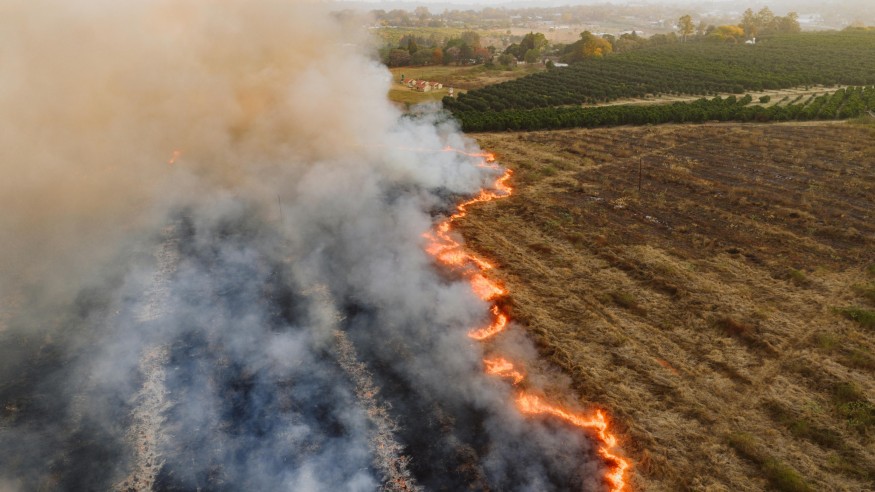
Scorching summers and raging infernos dominate news feeds, from vast Canadian smoke clouds choking distant cities to Australia's bone-dry outback fueling endless blazes. This isn't random chaos—it's a repeating cycle where droughts ignite wildfires, which then worsen water shortages in profound ways. Climate change supercharges it all through drought climate impact that parches soils faster than ever, triggers wildfire season extension into shoulder seasons, and ignites a water scarcity crisis felt from farms to faucets. Meanwhile, arid regions expansion creeps into once-lush areas, threatening food security, wildlife, and entire economies. Grasping this interplay reveals why these disasters strike harder, more frequently, and across broader swaths of the planet.
The Rising Heat: What Fuels the Drought-Wildfire Link?
Global warming doesn't just raise thermometers—it evaporates moisture at an alarming rate, magnifying drought climate impact in measurable ways. For every degree Celsius of warming, soils lose up to 10% more water, straight from IPCC reports spanning decades of data. Rain patterns warp too: some spots drown in erratic downpours, while others endure endless dry spells that kill off grasses and trees.
Human habits amplify the mess. Sprawling cities pave over absorbent wetlands and forests, overgrazing by livestock strips, protective ground cover, and poor land management leaves soils exposed. The result? A primed tinderbox ready to explode. NASA's satellite observations from 2024-2025 captured this vividly, showing drought-stricken zones in the U.S. West and Mediterranean lighting up with uncontrolled fires.
Key drivers of this deadly synergy break down like this:
- Higher evaporation rates: Warmer air pulls moisture from plants, soil, and even lakes at double the historical pace.
- Altered jet streams: They stall weather patterns, trapping prolonged heat domes over vulnerable regions for weeks.
- Carbon feedback loops: Massive fires release billions of tons of stored greenhouse gases, locking in even more warming and dryness.
This buildup transforms fleeting dry periods into multi-year megadroughts, relentlessly setting stages for explosive blazes that reshape landscapes.
Fire Seasons That Never End: Patterns and Global Hotspots
Wildfire season extension has upended old calendars—what used to mean a tight summer window now drags into spring and fall, per NOAA's long-term tracking. In California alone, fire-prone days ballooned from about 50 in the 1980s to over 100 by 2025. Drier, denser fuels burn hotter, faster, and farther, birthing megafires that leap highways, ravage suburbs, and generate their own weather like fire whirls.
Real-world examples paint the escalating picture:
- Canada's 2023-2024 wildfires: The continent's worst on record scorched 45 million acres—larger than New York and Pennsylvania combined—forcing 200,000 evacuations and sending smoke to Europe.
- Australia's Black Summer (2019-2020): A brutal drought preceded blazes that killed or displaced 3 billion animals; 2025 brought troubling echoes with early-season hotspots.
- Amazon tipping point: Widespread deforestation plus intensifying drought climate impact fueled 2024 fires across 20% of the rainforest, threatening its role as Earth's green lung and global moisture source.
- California's Camp Fire redux: 2023-2024 events mirrored the 2018 tragedy, burning entire towns amid winds gusting to 80 mph.
These aren't isolated incidents. Plumes of smoke circle the globe, temporarily cooling local skies but worsening long-term drought climate impact by suppressing rain formation. Economic tolls mount too—U.S. wildfire suppression alone topped $3 billion in 2025.
Water Wars and Desert Creep: Far-Reaching Ripples
Droughts and fires strike at water's core, birthing a water scarcity crisis that ripples through daily life. Iconic basins like the Colorado River plunged to 25% capacity in 2025, squeezing supplies for 40 million people across seven U.S. states and Mexico. Farmers follow vast fields, cities roll out strict rationing, industries throttle operations, and hydropower flickers.
Post-fire fallout hits hardest: Scorched earth turns hydrophobic, shedding rain like oil on water and sparking debris flows that bury roads and silt reservoirs. California's 2020 fire scars still taint water for thousands, a pattern repeating globally.
Arid regions expansion turbocharges the threat. World Bank models project 10-20% more desert-like terrain by 2050, swallowing productive lands. Affected hotspots include:
- U.S. Southwest: A megadrought grinding since 2000 ranks as the worst in 1,200 years, confirmed by tree-ring records—Lake Mead's "bathtub ring" exposes drowned boats.
- Mediterranean basin: Greece and Spain grapple with yearly "fire tornadoes," while shrinking olive groves signal permanent dryness.
- Sahel region in Africa: Deserts march southward at 10 km per year, displacing 2 million farmers and heightening conflict over shrinking oases.
- India and South Asia: Faltering monsoons blend with heatwaves, cutting rice yields by 15% in key states.
NOAA's climate outlooks flag cascading blows: Crop failures drive food inflation, wildlife corridors shatter, and coastal zones battle saltwater intrusion as overpumped aquifers collapse.
Breaking the Cycle: Proven Tools and Tactics
Prediction tech spearheads defense. AI platforms from outfits like Google and NOAA now crunch satellite imagery, soil humidity, wind forecasts, and vegetation health to pinpoint wildfire season extension risks up to three weeks out. Australia's revamped alert system slashed 2024 property losses by 40%.
On-the-ground tactics deliver results:
- Controlled burns and thinning: U.S. Forest Service programs clear deadwood proactively; Indigenous-led efforts in Australia restore cultural fire practices.
- Water innovations: Drip irrigation slashes farm use by 50%, while desalination plants in California now supply 10% of urban needs to fight water scarcity crisis.
- Smart reforestation: Planting drought-hardy species like acacias and eucalypts rebuilds moisture-retaining canopies faster.
- Community firebreaks: Goat grazing crews and shaded fuel breaks protect 1 million U.S. homes at risk.
- Policy momentum: EU's 2023 drought resilience fund pours billions into infrastructure; U.S. bills expand federal grants for rural hardening.
IPCC scenarios crunch the numbers: Aggressive adoption could slash risks 30-50%, turning a runaway cycle into a contained challenge through blended tech, nature, and smart governance.
Paths to a Less Fiery Future
Drought climate impact, wildfire season extension, water scarcity crisis, and arid regions expansion signal urgent shifts, but equipped communities rewrite the story. AI forecasts, resilient planting, and bold policies prove effective. Dive into NASA's fire maps, join local reforestation, back emission cuts—collective steps build buffers against drier, hotter years ahead.
Frequently Asked Questions
1. What causes droughts to worsen wildfires under climate change?
Droughts dry out vegetation, making it highly flammable, while warmer temperatures from drought climate impact extend dry periods. This creates ideal conditions for fires, as seen in Australia's Black Summer, where parched fuels burned hotter per IPCC reports.
2. How much has the wildfire season lengthened due to climate change?
Wildfire season extension has added 60+ days in places like California since the 1970s, per NOAA data. Hotter springs and falls now ignite blazes earlier and later, fueling megafires in Canada and the U.S. West.
3. Is water scarcity directly linked to droughts and wildfires?
Yes, droughts trigger water scarcity crises by depleting reservoirs like the Colorado River (25% capacity in 2025), while post-fire ash contaminates supplies. This loop hits farms and cities hard, amplifying food shortages.
© 2026 NatureWorldNews.com All rights reserved. Do not reproduce without permission.


