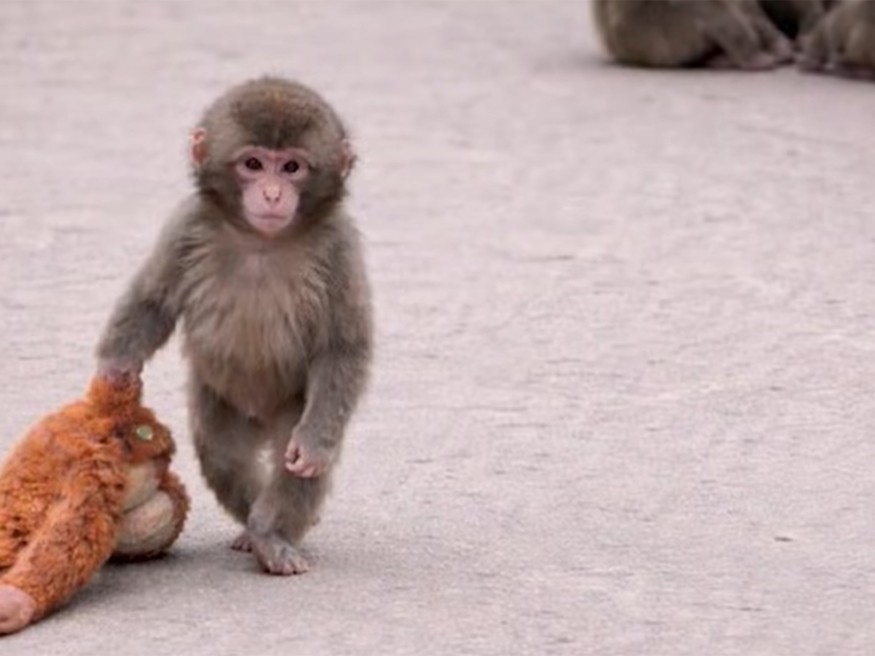
Punch the monkey, the tiny Japanese macaque from Ichikawa City Zoological and Botanical Gardens, stole hearts online after his mother abandoned him in July 2025. Born during a scorching heatwave, this punch the monkey tale reveals raw instincts behind maternal rejection in animals.
Punch the Monkey's Rough Beginnings
Punch the monkey arrived amid extreme heat that overwhelmed his first-time mother, a young Japanese macaque navigating her debut at motherhood. Just days after birth, she pushed him aside completely, leaving zookeepers no choice but to step in with round-the-clock bottle feedings and a soft stuffed orangutan toy from IKEA, according to TODAY. That plush became his lifeline, clutched tight for comfort and to build essential arm muscles needed for clinging in the wild. Viral videos spread like wildfire, showing Punch the monkey dragging his toy across the rocky enclosure on Monkey Mountain, dodging sharp nips and shoves from older, dominant troop members enforcing their strict social hierarchy,and USA Today coverage. Without her protection, he faced constant risks in the group's matriarchal order, where newborns rely on moms for safety and lessons in grooming, play bows, and rank signals. The zoo's official statement on X clarified early clips of scolding as typical maternal discipline from other females, not outright bullying, as noted by Mashable.
Why Mother Animals Abandon Offspring
Mother animals abandon offspring when survival instincts override nurturing drives, a harsh reality shaped by evolution. Scarce food sources, illness, or intense environmental stress—like the record heat that hit Ichikawa City Zoo—prompt moms to prioritize their own recovery over vulnerable young, NDTV. Deer quietly leave frail fawns in tall grass; birds nudge weak chicks from nests to safeguard stronger siblings and the clutch's future. In primates, this rejection remains rare but hits hard, as infants depend on months of carrying and teaching. Punch the monkey's case aligns perfectly: his mother's inexperience clashed with heat exhaustion, flipping her focus to self-preservation amid disrupted bonding hormones, per primatologist Alison Behie at Australian National University in The Guardian. Other triggers include health issues in the mom, where energy diverts to healing, or past troop traumas that echo into neglect cycles. Experts from Economic Times link these to Punch the monkey's plight, noting first-time stress in Japanese macaques.
Punch the Monkey's Path Forward
Fast-forward to February 2026, and Punch the monkey shows real progress in his troop integration. He now mingles more freely, picking up key social cues like submissive grins and gentle grooming sessions while loosening his grip on that faithful toy, according to recent Mashable updates. Zookeepers report fewer aggressive encounters—a February 23 update noted him playing with baby monkeys and eating independently—with an adult female even grooming him as a peace sign, as shared by Latestly. Human intervention—patient hand-rearing and gradual reintroductions—bridges gaps that nature sometimes tears open, blending instinct with care in captivity, as detailed by ABC News and the zoo. His journey highlights zoo roles in rare rejects, while sparking talks on exotic pet dangers fueled by viral fame from Channel News Asia.
Insights from Punch the Monkey's Journey
Punch the monkey's ongoing saga—from isolated infant to budding troop player—mirrors nature's tough balances, where abandonment ensures species endurance. Recent updates from Latestly keep followers engaged, weaving animal behavior with recovery arcs that inspire beyond the initial heartbreak.
© 2026 NatureWorldNews.com All rights reserved. Do not reproduce without permission.


