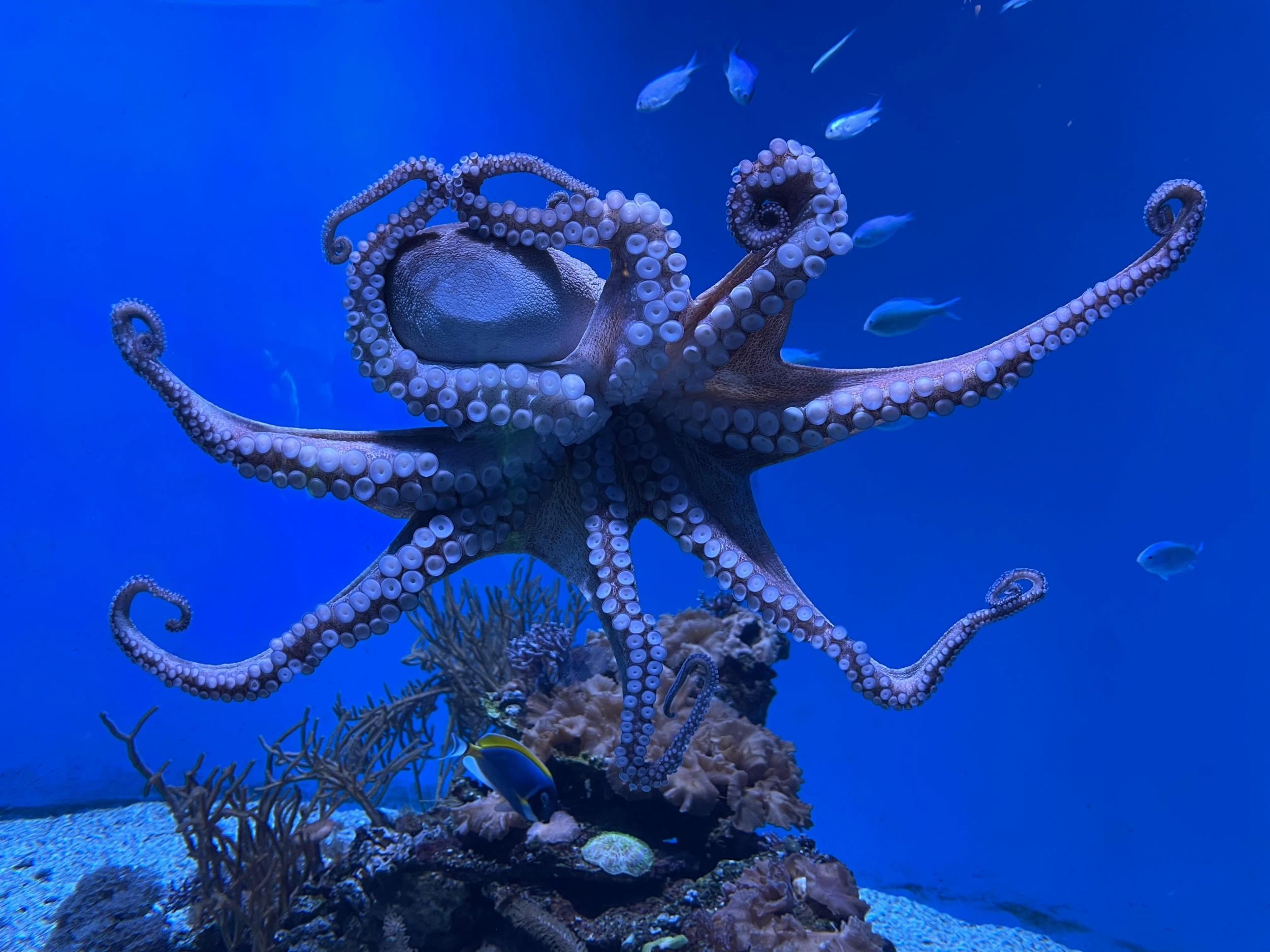
Paleontologists have recently identified Nanaimoteuthis haggarti, a massive, finned cephalopod that challenged the status quo of prehistoric marine dominance. By analyzing fossilized beaks, researchers have effectively confirmed that this giant prehistoric octopus existed as a formidable force, forever changing how we define the apex of the Cretaceous marine food web.
Unmasking the Cretaceous Kraken
For nearly a century, the scientific community assumed that the largest and most dangerous predators of the Cretaceous seas were exclusively marine reptiles. However, as noted in recent coverage by El País, a new study has shattered this vertebrate-centric perspective by detailing the discovery of 27 fossilized cephalopod beaks. These fossils, recovered from strata in Canada and Japan, belong to a previously underestimated group of octopuses. By examining the proportions of these beaks, researchers identified a species that thrived between 100 and 72 million years ago, effectively acting as a Cretaceous apex predator.
Scaling the Giant: How Big Was Nanaimoteuthis Haggarti?
The sheer scale of these creatures has redefined the limits of invertebrate growth. While modern giant squids are often the baseline for "monstrous" cephalopods, Nanaimoteuthis haggarti operates on an entirely different level of biological investment.
- Size Estimates: Scientific modeling suggests that mature individuals could reach total lengths of 62 feet (19 meters).
- Comparison to Modern Giants: This size makes it significantly larger than the Architeuthis dux, which rarely exceeds 39 feet in length.
- Physical Adaptations: These octopuses were equipped with specialized fins, which allowed them to navigate the water column with efficiency and grace despite their massive bulk.
These dimensions do not just place them among the largest invertebrates of the Cretaceous; they elevate them to the rank of some of the largest creatures to have ever navigated our oceans. As noted by researchers at the Natural History Museum, the physical presence of such a giant prehistoric octopus would have required an immense metabolic demand, suggesting a highly active and predatory lifestyle rather than a sedentary one.
Read Also: Quebec's 450M-Year-Old Paleocanna tentaculum: Rare Soft-Bodied Ordovician Jellyfish Fossil
The Ecology of a Super-Predator
To truly understand Nanaimoteuthis haggarti, one must look at the mechanical evidence preserved in the fossils. As reported by The Guardian, the structural integrity and signs of wear on these beaks suggest these animals were capable of breaking down hard-shelled prey and perhaps even the skeletal remains of smaller vertebrates.
The ecological implications are profound. If these animals were indeed hunting the same prey as marine reptiles, they were likely involved in direct, often violent, territorial competition. Unlike the passive scavengers of the modern seabed, Nanaimoteuthis haggarti functioned as a high-level hunter. This intelligence, combined with their sheer physical prowess, likely made them one of the most terrifying entities a smaller marine creature could encounter in the dim, high-pressure zones of the Cretaceous ocean.
Scientific Legacy and Evolutionary Questions
Why did these giants fade away? The extinction event that marked the end of the Cretaceous period significantly altered the composition of the world's oceans. While marine reptiles faced total collapse, the transition in cephalopod evolution was equally dramatic. The discovery of Nanaimoteuthis haggarti invites us to ask questions about the evolutionary pathways of intelligence and size. Was the evolution of such massive octopuses a response to the "arms race" against marine reptiles, or were they simply filling a niche that had been ignored until now?
The ongoing work of paleontologists and biologists across the globe continues to peel back the layers of these ancient ecosystems. Every new fossil discovery provides a clearer picture of how these creatures navigated a world dominated by giants. By incorporating these findings into our broader understanding of Earth's history—supported by ongoing research from institutions like National Geographic—we move away from simplistic models of "who ate whom" and toward a more nuanced, complex appreciation of prehistoric biodiversity.
Looking Toward Future Discoveries
The study of Nanaimoteuthis haggarti is far from complete. As more fossil sites are excavated and new analysis techniques—such as high-resolution CT scanning of fossilized tissues—become standard, we will likely find even more remnants of this Cretaceous apex predator. Each recovered beak acts as a silent witness to a time when the oceans were wild, vast, and teeming with creatures that continue to fuel our collective imagination. The era of the giant prehistoric octopus reminds us that the deep-sea remains the final frontier of paleontology, holding untold stories of the ancient life that once ruled beneath the waves.
Frequently Asked Questions
1. How was the size of Nanaimoteuthis haggarti estimated?
Researchers estimated the size of these ancient cephalopods by analyzing 27 fossilized beaks. By using established jaw-to-body-length ratios from modern finned octopuses—such as the deep-sea dumbo octopus—scientists calculated total body lengths ranging from approximately 22 to 62 feet (6.6 to 19 meters).
2. Are the size estimates universally accepted?
While the discovery has been widely publicized, some researchers remain cautious regarding the upper end of the size estimates. Because the body size is calculated based on beak ratios, the final total length can vary depending on which modern species is used as the comparative baseline.
3. What did this giant octopus eat?
Evidence of wear and structural damage on the fossilized beaks suggests that N. haggarti was a powerful, active predator. It likely fed on a variety of marine life, including hard-shelled organisms, crustaceans, and potentially bones, indicating it occupied a high-level position in the Cretaceous food chain.
© 2026 NatureWorldNews.com All rights reserved. Do not reproduce without permission.


