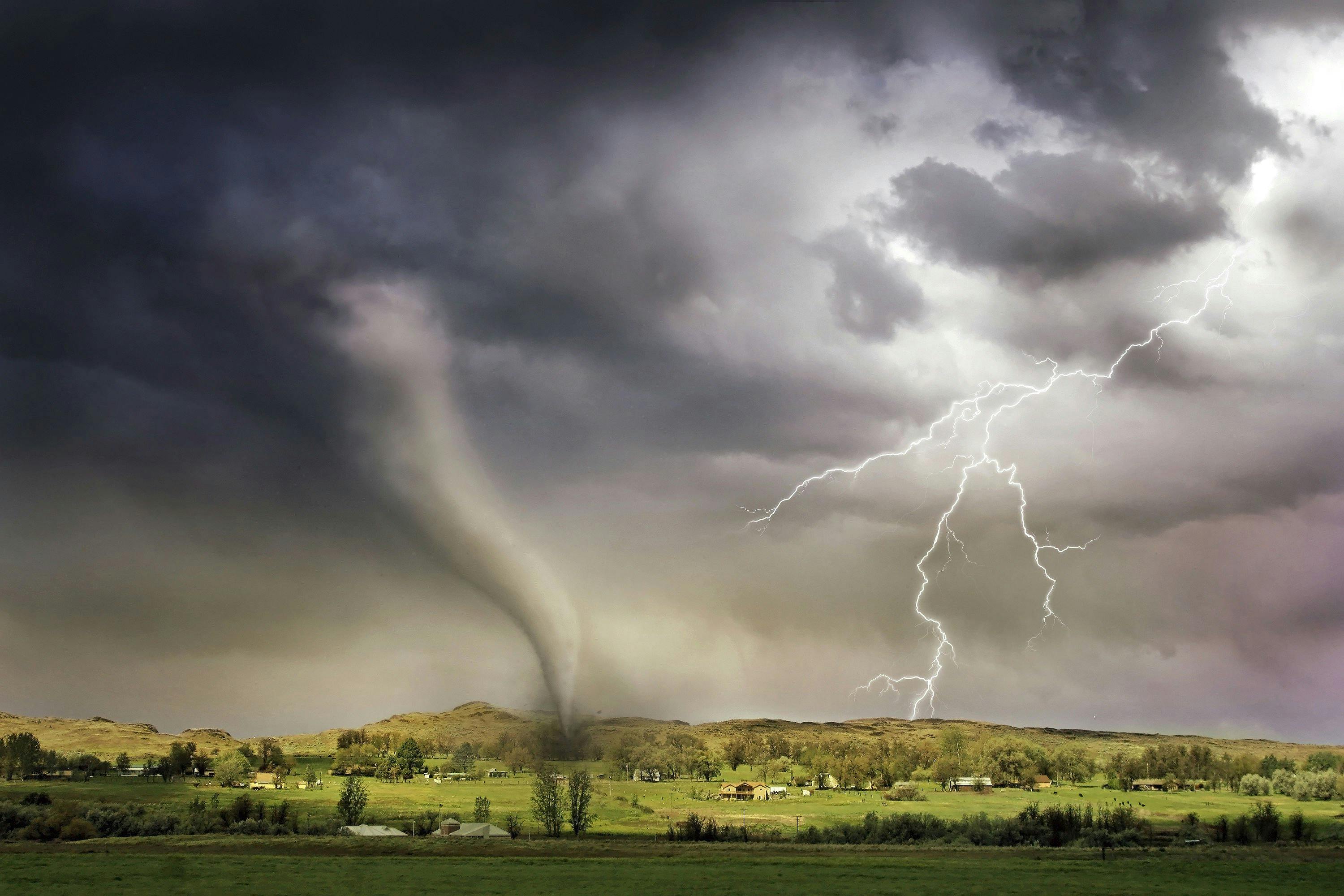
Tornado Alley supercells produce wall clouds and intense tornadoes rated by the Fujita Scale using damage indicators. This guide explores Tornado Formation Science involving mesocyclones, hook echoes, and wedge tornadoes for a clear understanding of these storms.
Supercells Dominate Tornado Alley
Tornado Alley covers central U.S. plains where supercells thrive on clashing air masses, wind shear, and instability. These storms rotate persistently, unlike regular thunderstorms, creating conditions ripe for tornadoes.
Supercells feature a mesocyclone—a wide rotating updraft—at their core. Mid-level mesocyclones tilt horizontal wind vorticity vertically, sustaining power for hours.
Distinctive markers set supercells apart:
- Rain-free base beneath the updraft
- Overshooting dome at the anvil top
- Bounded weak echo region on radar
Wall clouds hang low from this base, signaling concentrated inflow. National Weather Service notes describe them as rotating lowers persistent for 10-20 minutes before tornadoes touch down.
Wedge tornadoes emerge from the strongest supercells here, appearing broad and blocky from afar. Their size packs violent winds, often EF3 or higher.
Tornado Formation Science Behind Mesocyclones
Tornado Formation Science starts with mesocyclones stretching rotation downward. Wind shear near the ground concentrates spin, forming funnels that may widen into wedge tornadoes.
The process unfolds in stages:
- Horizontal spin from wind shear tilts into vertical mesocyclone by updraft.
- Rear-flank downdraft wraps around, tightening low-level rotation.
- Wall clouds form as air rushes in, cooling and condensing.
- The funnel descends, intensifying into touchdown.
Hook echoes appear on radar as precipitation curls around the mesocyclone's rear flank. This signature, first noted in the 1950s, warns forecasters of imminent tornadoes.
Mesocyclones drive everything—without them, no supercells or tornadoes form reliably. In Tornado Alley, spring clashes of Gulf moisture and dry Rocky Mountain air amplify this dynamic.
Researchers at NOAA's National Severe Storms Lab highlight how low-level shear beneath mesocyclones dictates wedge tornado potential. Strong shear spins air faster, yielding wider, more destructive vortices.
Hook Echoes and Wedge Tornadoes Signals
Hook echoes pinpoint rotation on Doppler radar, with velocity couplets showing inbound and outbound winds. A tight hook often hides a wedge tornado in heavy rain.
Wedge tornadoes look like wedges hammered into earth, sometimes miles wide at base. They dominate outbreaks due to powerful parent mesocyclones.
Spotters use these cues:
- Persistent wall cloud with tail to ground
- Rapid debris loft under rain-free base
- Green sky tint from hail-lightning mix
- Roaring sound like freight train
Radar confirms via hook echoes, prompting warnings 10-15 minutes ahead. Dual-polarization now reveals debris balls, verifying touchdown even in poor visibility.
Wikipedia's supercell entry details how hook echoes correlate with tornado strength—longer hooks mean bigger threats like wedge tornadoes.
Fujita Scale and Damage Indicators Breakdown
The Fujita Scale rates tornadoes by damage, from EF0 (minor) to EF5 (incredible). Enhanced since 2007, it uses 28 damage indicators (DIs) for precision.
Common DIs include:
- One- or two-family residences (roofs peeled vs. swept clean)
- Mobile homes (overturned vs. airborne)
- Trees (branches snapped vs. debarked)
- Power poles (bent vs. splintered)
Each DI has eight degrees of damage (DOD), tying to three-second wind gusts. For example, EF2 debarks hardwood trees at 111-135 mph.
Surveyors visit post-storm, photographing wreckage against charts. Construction quality factors in—older homes fail sooner than engineered ones.
The original Fujita Scale from the 1970s overestimated winds; EF-scale refined estimates downward by 20-30 mph typically.
Wall Clouds as Tornado Precursors
Wall clouds mark the mesocyclone's base, lowering 2-4 miles up. Sharp edges and rotation distinguish them from shelves or beaver tails.
In Tornado Alley supercells, they persist longest, feeding warm moist air. Sustained lowers precede 70% of strong tornadoes.
Safe spotting involves:
- Distance from base to avoid hail cores
- Multiple vantage points for rotation check
- Radio coordination with chasers
- Exit plan for sudden wedges
Wall clouds churn visibly, scudding inward. NWS training modules stress their role in Tornado Formation Science.
Practical Safety During Supercell Outbreaks
Preparation beats reaction in Tornado Alley. Basements or interior rooms shield best against EF-scale winds.
Monitor via:
- NOAA Weather Radio for alerts
- Radar apps showing hook echoes
- Local spotter networks
- Sirens as last resort
Communities drill annually, knowing mesocyclones spawn wedges without mercy. Mobile home residents always seek sturdy shelter.
Mesocyclones Fuel Hook Echoes and More
Mesocyclones isolate updrafts from downdrafts, prolonging supercell life. Vertical shear keeps rotation tight, enhancing hook echoes.
Tornado Formation Science peaks when low-level mesocyclones merge with mid-level ones. This handover births wedges, roaring across plains.
Forecast models now predict mesocyclone strength hours ahead. High-resolution ensembles spot shear profiles favoring walls and hooks.
Storm chasers document via time-lapses, aiding research. Their footage reveals subtle shifts from wall cloud to wedge tornado touchdown.
Decoding Damage for EF Ratings
Post-storm, teams fan out using Fujita Scale checklists. A school gymnasium swept away screams EF4; asphalt scoured signals EF5.
Damage indicators standardize globally:
- Cars lifted: EF1 threshold
- Asphalt ripped: EF5 extreme
- Ground scouring: Rare violence
Engineers calibrate DIs yearly, accounting for new materials. This keeps EF-scale relevant amid building evolution.
Advances Tracking Supercell Threats
Phased-array radar scans faster, resolving mesocyclones in seconds. Tornado debris signatures confirm wedge tornadoes remotely.
Drones probe wall clouds safely, measuring winds inside. AI analyzes hook echoes, slashing warning false alarms.
Tornado Alley benefits most, with dense radars cutting deaths yearly. Understanding Tornado Formation Science saves lives.
Key Takeaways on Supercell Dynamics
Tornado Alley supercells showcase mesocyclone birthing hook echoes, wall clouds, and wedge tornadoes through precise Tornado Formation Science. Fujita Scale damage indicators quantify fury long after dissipation. Stay informed via NOAA resources and radar tools to navigate these forces wisely.
Frequently Asked Questions
1. What Causes Supercells to Form?
Supercells arise from extreme instability, abundant moisture, and strong vertical wind shear that tilts horizontal vorticity into a rotating mesocyclone. This deep, persistent updraft separates from precipitation, allowing storms to last hours and spawn tornadoes.
2. How Do Mesocyclones Lead to Tornadoes?
Mesocyclones stretch rotation downward through convergence at the storm's base, often under wall clouds. Low-level shear tightens this spin into funnels, potentially widening into wedge tornadoes when conditions align perfectly.
3. What Is a Hook Echo on Radar?
A hook echo appears as a curved appendage on Doppler radar where rain wraps around the mesocyclone's rear flank. It signals intense low-level rotation, frequently hiding developing wedge tornadoes in the notch.
© 2026 NatureWorldNews.com All rights reserved. Do not reproduce without permission.


