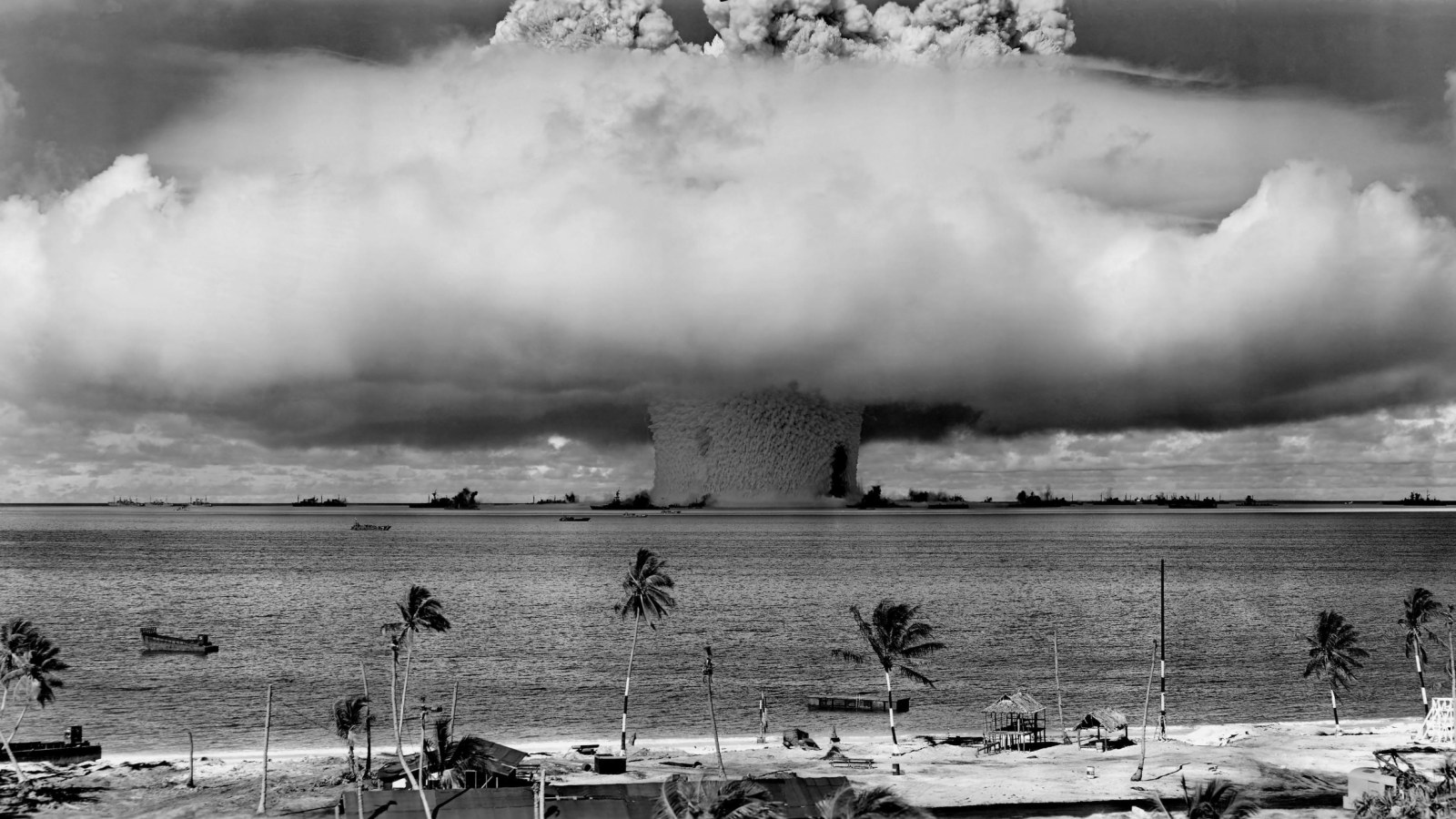
When scientists detonated the world's first atomic bomb during the Trinity Test in July 1945, they expected fire, shockwaves, and radioactive fallout. What they did not expect was the creation of a rare material once believed impossible by scientists. Decades later, researchers examining debris from the blast uncovered a strange crystal hidden inside trinitite, the glassy material formed when desert sand melted during the explosion. The discovery quickly gained attention because the structure matched a quasicrystal, a highly unusual type of matter with patterns that do not repeat like ordinary crystals.
The First Atomic Blast Left Behind More Than Destruction
The Trinity Test quasicrystal is now considered one of the most remarkable scientific surprises connected to nuclear history. Researchers say the impossible crystal nuclear explosion event created temperatures and pressures so extreme that matter reorganized itself into forms rarely seen on Earth. According to reports discussed by ScienceAlert, the material may also help scientists study secret nuclear tests and understand how exotic minerals form during catastrophic events.
What Is Trinitite and Why Is It Important?
Trinitite is the greenish glass created after the Trinity explosion melted desert sand, steel, copper wiring, and surrounding materials. The radioactive glass formed as the molten debris cooled rapidly after the blast.
Most trinitite appears green because of its mineral composition. However, scientists later identified rarer red samples containing copper from vaporized transmission lines near the bomb tower.
It was inside this red trinitite that researchers made the famous trinitite crystal discovery.
The material matters because it acts like a preserved snapshot of the first nuclear explosion. Scientists can study it to understand:
- The temperature reached during the detonation
- The chemical reactions triggered by the blast
- How radioactive materials interacted with the environment
- The creation of rare minerals and crystal structures
Researchers from several institutions have continued analyzing Trinity debris because modern technology allows them to detect microscopic structures impossible to identify decades ago.
The "Impossible" Crystal Hidden Inside the Blast Debris
The Trinity Test quasicrystal shocked scientists because quasicrystals were once thought impossible to exist naturally. Ordinary crystals repeat their atomic patterns evenly across space. Salt, diamonds, and quartz follow this predictable structure. Quasicrystals behave differently. Their atomic arrangement is ordered but never exactly repeats. This unusual structure creates symmetries once believed mathematically impossible in crystallography. The quasicrystal discovered in trinitite contained:
- Silicon
- Copper
- Calcium
- Iron
Scientists believe these elements fused together during the explosion and cooled rapidly enough to lock into the strange pattern. Researchers used advanced electron microscopy and X-ray analysis to confirm the structure. The crystal measured only micrometers wide, but its scientific significance was enormous. A study published through Proceedings of the National Academy of Sciences (PNAS)explained that the crystal displayed five-fold rotational symmetry, one of the defining features of quasicrystals.
How a Nuclear Explosion Created a Rare Crystal
The impossible crystal nuclear explosion event occurred because the Trinity blast created conditions rarely found on Earth. The detonation generated:
- Extreme heat hotter than the Sun's surface
- Massive pressure waves
- Instant vaporization of surrounding materials
- Rapid cooling within seconds
Scientists say quasicrystals usually require violent high-energy conditions to form. Similar structures have previously been found inside meteorites created by cosmic collisions. The Trinity explosion essentially recreated some of the same extreme physics on Earth.
Researchers believe the process unfolded in stages:
- The atomic bomb detonated and vaporized nearby materials
- Metals and minerals mixed together in the fireball
- Molten matter cooled rapidly after the shockwave expanded
- The unusual atomic structure became trapped inside solidifying trinitite
This sequence allowed the Trinity Test quasicrystal to form in a way scientists had never directly observed before.
Why Scientists Care About the Discovery
The trinitite crystal discovery is not only important for understanding the past. It may also have practical scientific uses today. One major area is nuclear forensics. Researchers believe unique crystals formed during atomic blasts could help identify:
- The type of nuclear device used
- Explosion temperatures
- Chemical signatures from weapons materials
- Evidence of secret nuclear tests
Scientists may eventually use quasicrystals and related minerals as forensic clues when analyzing nuclear debris. The discovery also matters for materials science. Quasicrystals are known for unusual properties such as:
- Heat resistance
- Hard surfaces
- Low friction
- Unique electrical behavior
Some industries already study quasicrystals for coatings, electronics, and specialized engineering applications. According to Scientific American, the Trinity discovery provided new evidence that violent explosions can create entirely new forms of matter.
Scientists Believe More Hidden Materials May Exist
Researchers now suspect that other unknown materials may still exist inside debris from nuclear test sites around the world.
The Trinity site alone produced thousands of tons of melted material during the explosion. Only a small fraction has been examined using modern instruments. Scientists are now searching for:
- Additional quasicrystals
- Shock-created minerals
- Rare metallic glass structures
- Previously unknown synthetic minerals
Some researchers compare nuclear test sites to natural impact craters formed by asteroid collisions. Both environments involve massive heat, pressure, and rapid material transformation.
The discovery also raises questions about how many "impossible" materials could form during other extreme events such as volcanic eruptions or planetary impacts.
The Trinity Site Still Shapes Modern Science
The Trinity Test remains one of the most important events of the 20th century. It marked the beginning of the nuclear age and permanently changed global politics, military strategy, and scientific research. Yet decades later, the site continues producing new scientific insights. The Trinity Test quasicrystal demonstrates that historical events can still hold hidden discoveries waiting for modern technology to uncover. What began as the world's first atomic bomb experiment unexpectedly became a breakthrough in crystallography and materials science.
Researchers continue studying trinitite because each sample may contain clues about how matter behaves under conditions almost impossible to reproduce in laboratories.
Frequently Asked Questions
1. What is the Trinity Test quasicrystal?
The Trinity Test quasicrystal is a rare crystal structure discovered inside trinitite formed during the world's first nuclear explosion in 1945.
2. Why is it called an impossible crystal?
Scientists once believed crystals could only form repeating atomic patterns. Quasicrystals break that rule with ordered but non-repeating structures.
3. What is trinitite made from?
Trinitite formed when desert sand, copper, steel, and other materials melted together during the Trinity nuclear blast.
© 2026 NatureWorldNews.com All rights reserved. Do not reproduce without permission.


