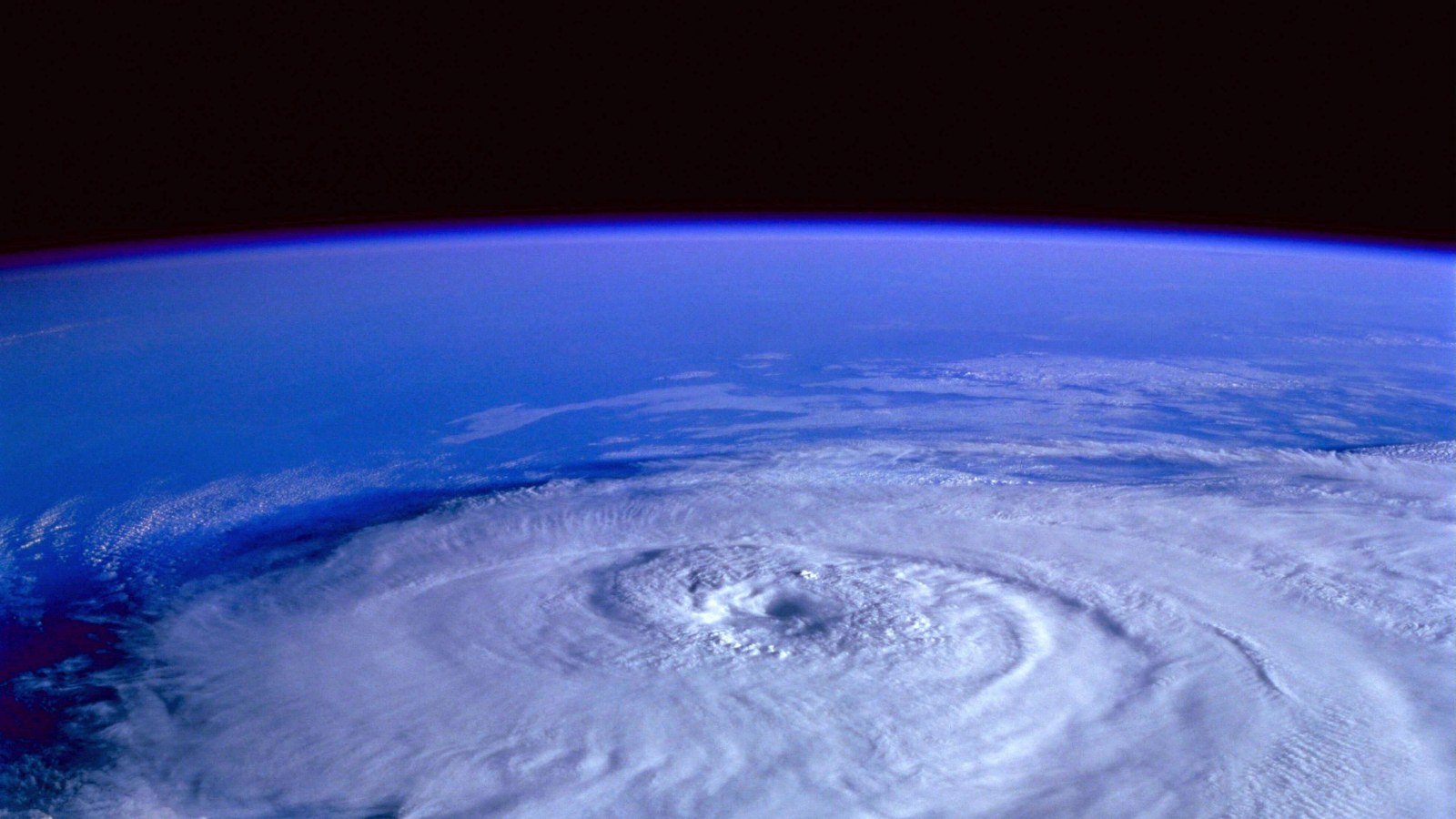
Hurricane tracking technology has advanced dramatically, giving meteorologists powerful tools to monitor Category 5 storms and decode phenomena like eyewall replacement. These systems, paired with the Saffir-Simpson scale, help forecast paths and impacts with growing precision. This detailed guide dives into the tech, processes, and predictions that protect coastal communities.
Hurricane Tracking Technology Essentials
- Satellites form the backbone of hurricane tracking technology, orbiting Earth to snap images of storms hundreds of miles wide over open oceans.
- Geostationary satellites like GOES-16 and GOES-17 hover in fixed spots, capturing visible, infrared, and microwave data every 5 to 15 minutes.
- This constant feed reveals storm structure, from swirling cloud bands to the tight eye at the center.
- When hurricanes spin up in remote areas, these birds-eye views provide the first alerts, tracking movement and estimating wind speeds through cloud motion.
- Doppler radar picks up the relay as storms near land, with ground stations along coastlines bouncing radio waves off raindrops and debris.
- These stations measure speed and direction to map wind shear and rotation.
- NEXRAD networks across the U.S. deliver real-time loops, showing how rainbands wrap around the core.
- Aircraft like NOAA's WP-3D Orion fly straight through eyes, deploying dropsondes that parachute data on pressure and humidity.
- Together, these tools feed global models such as the Global Forecast System, plotting paths days in advance.
- Hurricane tracking technology shines in handling Category 5 storms, the most ferocious on the Saffir-Simpson scale.
- These beasts sustain winds over 157 mph, shredding buildings and snapping trees like twigs.
- Satellites spot telltale signs early, like rapid deepening from warm Gulf Stream waters exceeding 82°F.
- Without this tech, forecasters would rely on sparse ship reports, missing subtle shifts that turn tropical storms into monsters.
Inside Category 5 Storms
Category 5 storms represent the peak of destruction, defined by the Saffir-Simpson scale as winds hitting 157 mph or more. This scale, developed in the 1970s by Herbert Saffir and Robert Simpson, simplifies communication: Category 1 brings minimal damage, while 5 spells catastrophe with total roof failures and inland flooding from surge alone. It focuses purely on sustained winds, ignoring rainfall or surge heights that can vary wildly.
These storms thrive on heat from ocean surfaces, where convection pulls in moist air that rises, cools, and unleashes torrents. The eyewall, a ring of towering thunderstorms, harbors peak winds—often 50-100 mph stronger than official readings. Satellites gauge intensity via the Dvorak technique, matching cloud patterns to historic data. For instance, Hurricane Ian in 2022 flickered between Category 4 and 5, its eyewall pulsing as seen from space.
Eyewall replacement adds drama to Category 5 storms. This process kicks off when outer rainbands ignite, forming a secondary eyewall 50-100 miles wide. The inner eyewall weakens as the outer one contracts, squeezing in over 12-48 hours. Winds often surge during this shift, as in Hurricane Wilma's 2005 rampage to 882 mb pressure, the lowest on record. Doppler radar catches the wind flips, while microwave imagers pierce clouds to show moisture rings. Without tracking this cycle, forecasts falter—replacement can double intensity or trigger weakening.
Penn State's research on satellite-radar fusion highlights how underused data refines these predictions. By blending polar-orbiting satellites with ground radar, models now spot eyewall tweaks hours earlier, buying evacuation time.
Read Also: What's Buried Beneath Antarctica? Exploring Hidden Ice Subglacial Lakes, and Untold Mysteries
Eyewall Replacement and Saffir-Simpson Insights
Eyewall replacement demands sharp hurricane tracking technology. It starts innocently: a moat of lighter rain forms outside the primary eyewall, fed by storm inflow. Convection explodes there, birthing the new wall that marches inward, starving the old one of fuel. Satellites flag it with expanding cold cloud tops on infrared scans; radar confirms via Doppler velocity pairs showing inflow-outflow shifts.
This isn't rare in majors—about 70% of Category 4-5 storms undergo it, per NOAA studies. The lull mid-cycle fools novices, but pros watch for rebound. Hurricane Maria in 2017 replaced its eyewall offshore, exploding to Category 5 before Puerto Rico. Tracking tech caught the moisture surge via SSMIS satellites, adjusting models mid-flight.
The Saffir-Simpson scale anchors public warnings, but critics note its wind-only focus misses surge risks. A skinny Category 2 can push bigger waves than a fat Category 4 due to speed and angle. Still, it works: colors on maps trigger action, from Category 1 sandbags to 5 full evacuations.
Here's a quick Saffir-Simpson breakdown:
- Category 1: 74-95 mph winds – Branches down, power out 1-2 days
- Category 2: 96-110 mph winds – Trees uprooted, power out weeks
- Category 3: 111-129 mph winds – Mobile homes destroyed, flooding
- Category 4: 130-156 mph winds – Homes uninhabitable, power months
- Category 5: 157+ mph winds – Frame homes wiped, surge 20+ ft
NOAA's Miami office details how this scale pairs with surge maps for layered alerts.
Storm Surge Prediction Power
Storm surge prediction ties hurricane tracking technology to coastal safety. Winds shove water into domes up to 20 feet high, racing ashore at 20 mph. Models like SLOSH (Sea, Lake, and Overland Surges from Hurricanes) run thousands of scenarios, factoring track, size, and bathymetry—shallow shelves amplify heights.
Satellites supply bathymetric tweaks via altimetry; radar adds real-time fetch. A slow Category 5 piles surge highest, as with Katrina's 28-foot wall in 2005. Modern ensembles from the European Centre for Medium-Range Weather Forecasts spit 80% confidence zones, shrinking error cones.
Doppler radar enhances this by mapping asymmetric winds—faster on the right-front quadrant. Aircraft tail radars slice the eyewall, feeding HWRF models that nail surge within 3-5 feet. Google's DeepMind AI, unveiled in 2025, crunches satellite feeds to predict surges 20% faster, spotting eyewall wobbles traditional physics misses.
Advances Shaping Tomorrow's Alerts
Hurricane tracking technology evolves fast. CubeSats swarm low orbits for 1-km resolution, catching eyewall replacement in HD. Lidar on planes lasers wind profiles; dual-pol radar sorts rain from hail. AI sifts petabytes, learning from 1,000+ storms to flag Category 5 upticks.
Quantum sensors loom, promising pressure reads from afar. But basics endure: satellites for scope, radar for grit. These layers slash track errors from 400 to 50 miles at day 3.
The Guardian covered DeepMind's edge in 2025, rivaling pros at lower compute. NOAA's HWRF upgrades, per their site, assimilate radar every 6 hours for eyewall precision.
Why Hurricane Tracking Matters Now
Hurricane tracking technology turns chaos into plans, pinpointing Category 5 storms amid eyewall replacement and Saffir-Simpson extremes. From satellite sweeps to radar dives, it fuels surge models that save thousands yearly. As seas warm, these tools stand between calm and catastrophe, delivering warnings that let families pack and flee.
Frequently Asked Questions
1. How does hurricane tracking technology work?
Hurricane tracking technology combines satellites for ocean-wide views, Doppler radar for wind mapping near land, and computer models to predict paths. Satellites like GOES capture images every few minutes, while radar reveals eyewall structures in real time.
2. What causes eyewall replacement in storms?
Eyewall replacement happens when outer rainbands form a new eyewall that spirals inward, often intensifying Category 5 storms. This cycle weakens the inner wall first, then rebuilds stronger, tracked via satellite cloud patterns and radar velocity shifts.
3. How accurate is storm surge prediction?
Storm surge prediction uses tracking data to model water heights within 3-5 feet accuracy. Factors like forward speed and Saffir-Simpson category refine forecasts, with tools like SLOSH running scenarios for coastal zones.
© 2026 NatureWorldNews.com All rights reserved. Do not reproduce without permission.


