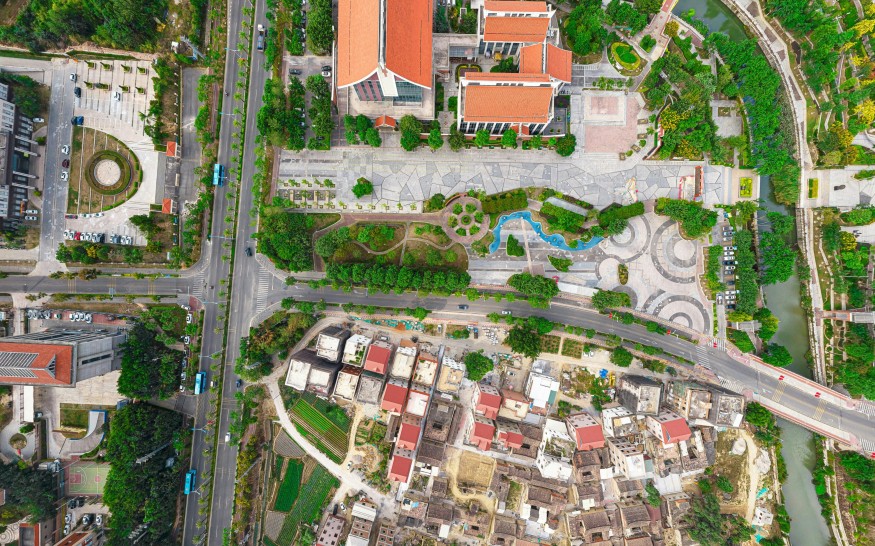
Cities around the world are searching for better ways to respond to climate change, rapid urban expansion, and growing infrastructure demands. Traditional planning methods often struggle to process the massive amounts of environmental and geographic data needed to make informed decisions. Now, researchers have introduced a smart city AI solution that could reshape how urban areas prepare for future climate risks.
Why Cities Need Smarter Climate Planning Tools
Urban areas face multiple environmental pressures at the same time. Rising temperatures, flooding, pollution, traffic congestion, and population growth continue to stretch city resources and infrastructure.
The new platform, called Ontoraster, was developed by researcher Dr. Arka Ghosh at Umeå University. According to a recent report from Phys.org, the system is designed to help planners and researchers analyze environmental and urban data more efficiently using artificial intelligence, semantic technologies, and geospatial mapping.
Climate-resilient urban planning focuses on helping cities prepare for these risks before they become emergencies. However, urban planners often deal with fragmented datasets stored across different systems, making analysis slow and difficult. This is one reason why artificial intelligence is becoming increasingly valuable in city planning. AI systems can organize and analyze huge volumes of information much faster than traditional methods.
Some of the main challenges cities currently face include:
- Increasing heatwaves and urban heat islands
- Flooding caused by extreme weather events
- Poor air quality and rising emissions
- Overcrowded transportation systems
- Pressure on energy and water resources
- Expanding infrastructure demands
A smart city AI solution can help planners connect these issues and identify patterns that may not be obvious through manual analysis alone.
How the New AI System Works
Ontoraster was developed to simplify the way environmental and urban data are processed. Instead of handling datasets separately, the system links multiple forms of information together into one intelligent framework.
The platform combines:
- Satellite imagery
- Climate and weather data
- Geographic information systems (GIS)
- Urban infrastructure records
- Population and land-use data
What makes the technology unique is its use of semantic AI and knowledge graphs. These tools help the system understand relationships between different types of information rather than simply storing them.
For example, the AI can connect:
- High population density with heat exposure
- Flood risks with poor drainage systems
- Traffic congestion with pollution levels
- Lack of green spaces with rising urban temperatures
According to Phys.org, Ontoraster allows users to ask complex questions in natural language and receive results much faster than older systems. Instead of manually sorting through large datasets, planners can identify vulnerable areas within seconds.
Researchers say this could save significant time for climate adaptation projects and urban development planning.
How AI Urban Climate Planning Is Changing Cities
AI urban climate planning is already transforming how some cities approach sustainability and infrastructure management. Artificial intelligence can process real-time environmental information and generate predictive insights that support faster decision-making.
Some major benefits include:
Faster Climate Risk Analysis
AI can quickly identify areas vulnerable to:
- Flooding
- Heatwaves
- Air pollution
- Coastal erosion
- Infrastructure stress
Better Infrastructure Planning
City planners can make more informed decisions about:
- Public transportation systems
- Housing developments
- Drainage networks
- Renewable energy placement
- Green infrastructure projects
Improved Emergency Preparedness
AI systems can help authorities prepare for extreme weather events by modeling potential disaster scenarios and evacuation plans.
More Efficient Resource Management
Artificial intelligence can optimize energy use, water distribution, and waste management systems to reduce environmental strain.
A study published by Nature Portfolio also highlighted how advanced AI models are improving climate simulations and urban environmental forecasting. Researchers believe these technologies may eventually help cities adapt more effectively to long-term climate changes.
Why Climate-Resilient Urban Planning Matters
Climate-resilient urban planning focuses on building cities that can withstand environmental stress while maintaining economic and social stability.
Many cities are now experiencing more frequent:
- Heatwaves
- Flooding events
- Severe storms
- Drought conditions
- Infrastructure failures linked to climate change
Without proper planning, these problems can disrupt transportation, public health systems, energy supplies, and local economies.
AI tools can improve resilience by helping planners predict future risks more accurately. Instead of reacting after disasters occur, cities can invest in preventive measures earlier.
For example, AI systems can help identify:
- Areas that need additional green spaces for cooling
- Neighborhoods vulnerable to flooding
- Infrastructure likely to fail during extreme weather
- Transportation routes at risk during emergencies
This proactive approach may help reduce long-term costs and improve public safety.
The Growing Role of Smart City AI Solutions
Smart city AI solutions are becoming increasingly common as governments invest in digital infrastructure and sustainability projects.
Artificial intelligence is now being used in several urban systems, including:
- Traffic management
- Energy grids
- Environmental monitoring
- Public transportation
- Waste collection
- Air-quality tracking
The integration of climate-focused AI systems expands these capabilities further. Instead of simply improving efficiency, AI can also support environmental protection and climate adaptation strategies.
Recent research published on arXiv has also examined how AI-powered urban models can analyze citywide heat patterns and predict environmental stress much faster than traditional climate simulations.
Experts say these advances could eventually help cities make real-time adjustments during climate emergencies.
Challenges and Concerns Surrounding AI Planning Systems
Despite the growing excitement surrounding AI urban climate planning, experts continue to raise important concerns about the technology.
Data Accuracy
AI systems depend heavily on accurate and complete datasets. Poor-quality data can produce unreliable predictions.
Privacy Issues
Some smart city technologies rely on large-scale data collection, raising concerns about surveillance and digital privacy.
High Costs
Developing and maintaining advanced AI systems can be expensive for governments and research institutions.
Technical Complexity
Many planning agencies still lack the technical expertise required to fully implement AI-driven systems.
Ethical Questions
Critics argue that important urban planning decisions should not rely entirely on automated systems without human oversight.
Researchers generally agree that AI should assist decision-makers rather than replace them completely.
How AI Could Shape the Future of Sustainable Cities
The future of climate-resilient urban planning will likely involve even deeper integration between artificial intelligence, satellite monitoring, digital twins, and Internet of Things (IoT) sensors.
Digital twins are virtual city models that simulate real-world conditions. Combined with AI, these systems could help planners test how infrastructure projects may affect traffic, emissions, flooding, or energy use before construction begins.
Future AI systems may also:
- Continuously monitor environmental changes in real time
- Predict infrastructure failures before they happen
- Optimize renewable energy systems automatically
- Improve disaster-response coordination
- Support long-term sustainability planning
As climate risks continue growing worldwide, many experts believe smart city AI solutions will become increasingly important for protecting urban populations and improving resilience.
Why AI Urban Climate Planning May Become Essential for Future Cities
The development of Ontoraster reflects a growing shift toward intelligent environmental planning and data-driven urban management. By helping researchers and governments analyze massive climate datasets faster and more efficiently, AI systems could improve how cities respond to environmental threats and sustainability challenges.
As reported by Phys.org and supported by emerging research from Nature Portfolio and arXiv, artificial intelligence is rapidly becoming one of the most important tools in climate-resilient urban planning. While challenges related to ethics, privacy, and implementation still remain, AI-driven systems may eventually help cities become safer, greener, and more adaptable to future climate pressures.
Frequently Asked Questions
1. What is AI urban climate planning?
AI urban climate planning refers to the use of artificial intelligence to analyze environmental, climate, and infrastructure data to help cities prepare for climate-related risks and improve sustainability.
2. What is a smart city AI solution?
A smart city AI solution is a technology platform that uses AI, sensors, and data analysis to improve urban services such as transportation, energy management, environmental monitoring, and public safety.
3. How does AI help climate-resilient urban planning?
AI helps climate-resilient urban planning by predicting environmental risks, analyzing urban vulnerabilities, optimizing infrastructure decisions, and supporting disaster preparedness strategies.
4. What is Ontoraster?
Ontoraster is a newly developed AI platform created by researcher Dr. Arka Ghosh at Umeå University. The system helps planners analyze complex urban and climate data using semantic AI and geospatial technologies.
© 2026 NatureWorldNews.com All rights reserved. Do not reproduce without permission.


