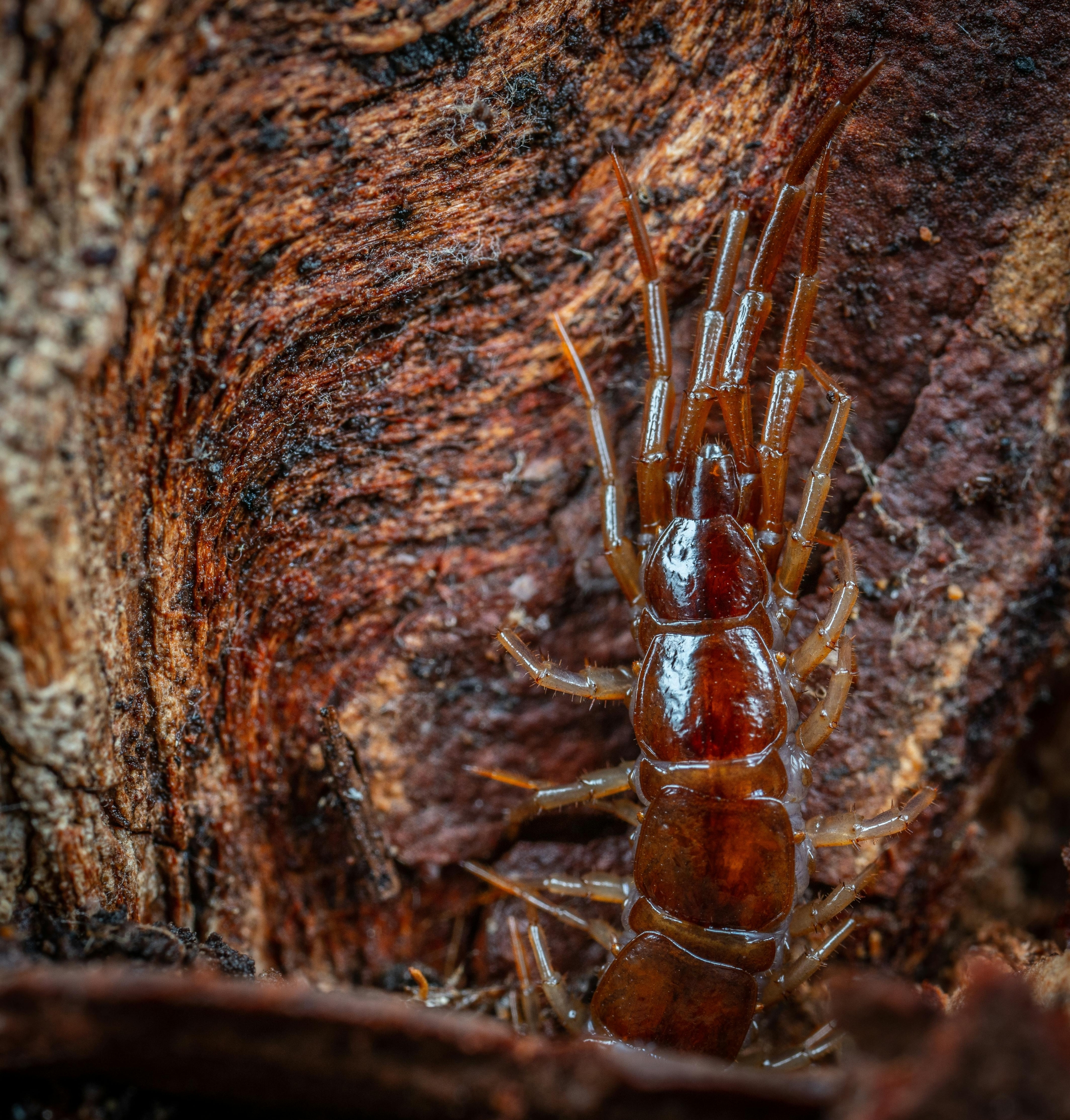
Hundreds of millions of years before dinosaurs walked the planet, strange segmented creatures were already transforming Earth's surface. Among the earliest pioneers were the ancient centipede ancestors that helped establish life on land during one of evolution's most important turning points.
Scientists studying early land arthropods now believe these creatures may have reached terrestrial environments earlier than previously thought. Fossil discoveries, ancient trackways, and new imaging technology are helping researchers understand how prehistoric centipede evolution unfolded in a world that was once mostly barren rock and shallow coastal mudflats. Modern centipedes still carry many features inherited from these ancient survivors, making them living reminders of one of Earth's oldest evolutionary success stories.
The Moment Arthropods Left the Ocean
For much of Earth's early history, life existed almost entirely underwater. Oceans were filled with primitive organisms, while land remained largely empty except for microbial mats and the earliest simple plants.
At some point roughly 400 to 500 million years ago, certain arthropods began venturing into damp coastal environments. Scientists think tidal zones and shallow shorelines played a critical role in this transition because they exposed marine creatures to periodic dry conditions.
According to a recent report from The New York Times, researchers are reexamining how myriapods — the group that includes centipedes and millipedes — became some of the first successful terrestrial animals. Fossil evidence suggests these early land arthropods may have adapted to life outside water sooner than scientists once believed.
The move onto land was not simple. Ancient creatures faced several major challenges:
- Preventing dehydration
- Breathing air instead of extracting oxygen from water
- Supporting their bodies without buoyancy
- Navigating rough terrain
- Surviving extreme temperature changes
Only a handful of organisms developed the traits necessary to survive these harsh conditions.
What Ancient Centipede Ancestors Looked Like
Ancient centipede ancestors were part of a broader arthropod lineage known as myriapods. These creatures evolved segmented bodies, protective exoskeletons, and numerous legs that helped them move across uneven surfaces. Unlike modern insects, early myriapods were among the first animals to fully adapt to terrestrial ecosystems.
Scientists studying prehistoric centipede evolution believe these creatures likely resembled small elongated arthropods that lived near wetlands, riverbanks, and coastal habitats.
Some of the defining characteristics of ancient myriapods included:
- Segmented bodies that improved flexibility
- Hard exoskeletons that reduced water loss
- Multiple legs for stability on land
- Sensitive antennae for detecting environmental changes
- Primitive breathing structures capable of handling air exposure
Over time, these features became increasingly refined, allowing centipedes to become highly successful predators.
Fossils That Changed the Scientific Timeline
One of the biggest breakthroughs in studying ancient centipede ancestors came from fossil discoveries containing evidence of air-breathing systems. A species called Pneumodesmus newmani, discovered in Scotland, is widely considered one of the oldest known air-breathing land animals. The fossil dates back more than 420 million years and preserves tiny spiracles — openings used for breathing air.
This discovery became major evidence that some early land arthropods had fully adapted to terrestrial environments during the Silurian Period. Another important area of research involves fossilized trackways. Instead of preserving the animals themselves, these fossils capture the trails left behind as ancient arthropods moved across soft sediment.
Trackways discovered in locations including:
- Scotland
- England
- Quebec
- Pennsylvania
- Wisconsin
- New York State
Suggest some arthropods may have walked on land even earlier than existing body fossils indicate.
Researchers featured in paleontology studies published through MDPI journals have noted that these trace fossils could help fill major gaps in understanding prehistoric centipede evolution.
How Early Land Arthropods Learned to Breathe
Breathing air represented one of the greatest evolutionary hurdles for ancient arthropods.
Marine animals relied on gills supported by water, but terrestrial life required entirely new respiratory systems. Ancient centipede ancestors evolved internal tube-like structures known as tracheae, connected to outside openings called spiracles.
This system allowed oxygen to travel directly into body tissues without requiring lungs.
Scientists believe humid coastal habitats gave early arthropods enough protection while these respiratory systems evolved gradually over millions of years.
The transition likely happened in stages:
- Temporary land exposure in tidal zones
- Short-term survival in damp habitats
- Development of air-tolerant respiratory systems
- Permanent colonization of land ecosystems
This gradual adaptation process helped establish some of the earliest terrestrial food webs.
Why Centipedes Became Successful Predators
Modern centipedes are known for speed, venom, and aggressive hunting behavior. Researchers think many of these traits developed very early in centipede evolution.
Ancient centipede ancestors likely hunted:
- Small worms
- Primitive insects
- Soft-bodied invertebrates
- Tiny arthropods living in moist soil
As terrestrial ecosystems expanded, predatory arthropods gained access to entirely new food sources with relatively little competition. One major advantage centipedes developed was the evolution of venomous appendages called forcipules. These modified front limbs allowed them to immobilize prey quickly.
Their long bodies and multiple legs also gave them excellent maneuverability across rocky terrain and dense vegetation. Because few large land predators existed during these early periods, centipedes occupied an important ecological niche.
Giant Arthropods Once Ruled Ancient Landscapes
Some ancient relatives of centipedes and millipedes eventually grew to enormous sizes.
Perhaps the most famous example is Arthropleura, a giant millipede-like arthropod that lived roughly 300 million years ago. According to a Reuters science report covering fossil research, some specimens may have exceeded 2.5 meters in length. Although Arthropleura was not a true centipede, it demonstrated how successful early land arthropods became after adapting to terrestrial life.
Scientists believe several factors contributed to these giant sizes:
- Higher atmospheric oxygen levels
- Abundant plant material
- Limited competition from vertebrate predators
- Stable swamp ecosystems
These prehistoric environments created ideal conditions for arthropods to diversify rapidly.
Why Scientists Continue Studying Prehistoric Centipede Evolution
The study of prehistoric centipede evolution provides important clues about one of Earth's greatest biological transformations.
Understanding how arthropods adapted to land helps scientists answer broader questions about:
- The development of complex ecosystems
- The origins of terrestrial predators
- Climate conditions during early land colonization
- Evolutionary adaptations that shaped modern animals
New technologies are also changing how fossils are studied. CT scanning and digital reconstruction techniques now allow paleontologists to examine fragile fossils without damaging them.
As researchers uncover more evidence, scientific timelines continue shifting. Some studies now suggest arthropods may have reached land millions of years earlier than once believed. That possibility could significantly reshape the understanding of Earth's evolutionary history.
How Ancient Centipede Ancestors Changed the Planet
The success of ancient centipede ancestors helped open the door for increasingly complex terrestrial ecosystems. Once arthropods established themselves on land, they contributed to soil formation, nutrient cycling, and the growth of early food chains.
Their adaptations also created a blueprint for future terrestrial animals.
Today's centipedes still retain many ancient survival traits, from segmented bodies to venomous hunting tools. Even after hundreds of millions of years, these creatures remain closely connected to some of Earth's earliest land pioneers.
Every new fossil discovery continues adding detail to the story of how early land arthropods transformed a once-empty landscape into a thriving world filled with life.
Frequently Asked Questions
1. What are ancient centipede ancestors?
Ancient centipede ancestors were early myriapods that evolved hundreds of millions of years ago and became some of the first animals to permanently live on land.
2. When did centipedes first appear on Earth?
Scientists believe early centipede-like arthropods appeared more than 420 million years ago during the Silurian Period.
3. How did early land arthropods survive outside water?
They evolved waterproof exoskeletons, air-breathing systems called tracheae, and multiple legs that helped them move efficiently across land.
© 2026 NatureWorldNews.com All rights reserved. Do not reproduce without permission.


