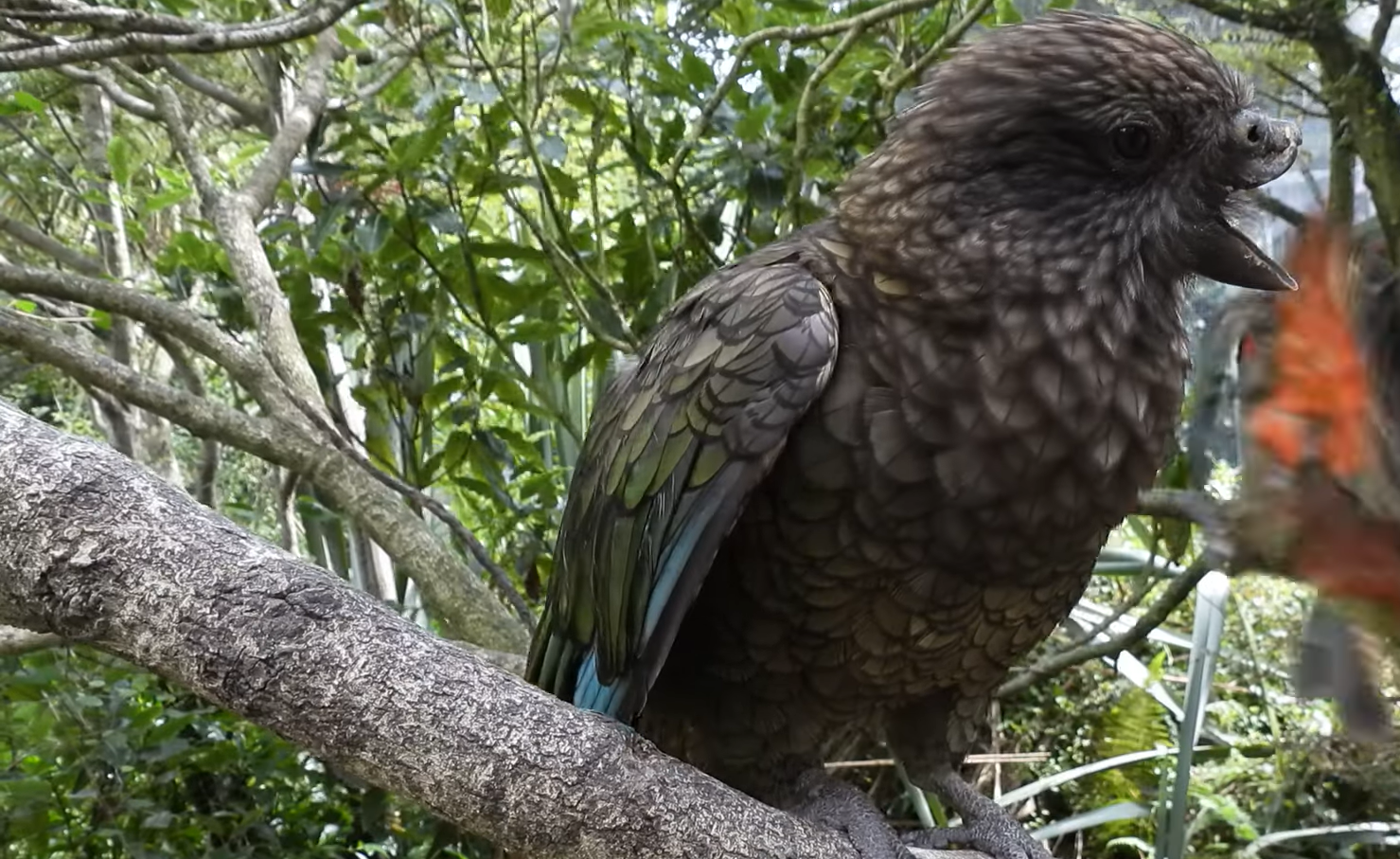
Bruce the kea parrot defies expectations by ruling his group despite missing his upper beak entirely. This New Zealand native has perfected a unique fighting style that keeps him at the top of the pecking order. His story blends animal smarts with raw determination, drawing eyes from science circles to social media feeds.
Bruce the Kea Parrot's Remarkable Backstory
Kea parrots like Bruce thrive in New Zealand's rugged mountains, known for their cheeky intelligence and olive-green feathers. Rescued as a young bird at Willowbank Wildlife Reserve, he lost the upper half of his beak—likely snared in a rat trap common in the wild. Now over a decade in captivity, he shares an aviary with more than 10 others, turning a harsh start into daily dominance.
Life without a full beak demands workarounds. Bruce grabs pebbles to scratch his feathers since preening stays out of reach. Fecal samples reveal his stress hormones sit lowest in the group, a perk of his top-dog status. Staff describe him as the ultimate hooligan—playful yet fearless—always first to the feeding platform.
Live Science covered his journey in April 2026, spotlighting footage that went viral for showing pure parrot grit.
Inside Beakless Parrot Jousting
Beakless parrot jousting isn't a sport with lances or helmets; it's Bruce's real-life adaptation of kea social clashes. Intact birds settle scores by biting necks during standoffs, much like knights clashing for territory. These scraps decide who eats first and who gets groomed, playing out on raised platforms in the aviary.
Bruce flips the script. Lacking a biting edge, he charges with neck thrusts or explosive leaps, aiming lower beak and claws at heads, wings, or legs. A Current Biology study tracked 36 of these bouts—all wins for him, often without a single touch. The tactic's speed and surprise leave rivals backing off fast.
Key elements of kea jousting:
- Platform battles: Birds face off over food spots, highest perch wins priority.
- Bite vs. thrust: Normal kea chomp; Bruce pokes and prods to unbalance foes.
- No blood, all brains: Fights end in retreats, not injuries, keeping the group tight.
National Geographicran a piece with video clips from researcher Alex Grabham, proving how one bird's tweak rewrote the rules.
How Bruce the Kea Parrot Pulls Off Undefeated Wins
Picture Bruce spotting a challenger: he extends his neck for a close-up stab or builds speed for a flying kick. Close-range hits land 73% of the time right away, per observations. His lighter head—minus the upper beak—gives him zip that full-beaked birds can't match.
Long-range moves shine too. He races across the platform, jumps with claws out, and spooks opponents into flight. No kea has copied it; their beaks demand different plays. This edge lets Bruce hold alpha status solo, a rare feat for any disabled animal.
Breakdown of his technique:
- Neck thrust: Quick jab at vulnerable spots, forces instant yield.
- Run-jump assault: Momentum builds fear; claws add the threat.
- Feint and follow: Rare dodges keep attacks fresh and unpredictable.
The combo drops stress across the aviary—fewer fights mean calmer birds all around.
Grabham's footage freezes Bruce mid-thrust, beak gleaming like a spear tip.
Why Bruce Stands as the Disabled Parrot Alpha
The top spot brings perks. Bruce dives into meals first, while others wait. Females in the group clean his beak and feathers, a luxury for leaders only. His record? Undefeated in every watched clash, securing space without constant drama.
This disabled parrot alpha setup flips old ideas. Physical flaws don't doom hierarchy; brains do the heavy lifting. Willowbank keepers skipped beak prosthetics after seeing him thrive naturally—meddling might've dulled his edge. In the wild, bigger flocks could test him, but here he reigns supreme.
Benefits of his rule:
- Food access: Eats without shoving matches.
- Grooming rights: Gets pampered, stays neat despite the injury.
- Low cortisol: Healthiest bird, proven by tests.
Phys.org detailed the study behind it, noting Bruce as the first impaired animal to climb ranks purely on strategy.
Read Also: Florida's Worst Drought in 15 Years Hits 2026: Intense Causes Exposed and Duration Forecast Revealed
Key Takeaways from Beakless Parrot Jousting Mastery
Kea smarts run deep—think tool use, like Bruce's pebble grooming. His story spotlights how disabilities spark creativity, not defeat. Aviary life lets this play out safely, but it nudges talks on wild kea threats: predators, traps, shrinking habitats.
Watchers online share clips, fueling chats on pet adaptations too. Dogs with missing limbs or cats post-surgery often invent moves much like Bruce. Conservation groups nod to him as a mascot for endangered species, pushing habitat funds.
Bruce the kea parrot turned beakless parrot jousting into his superpower, cementing disabled parrot alpha legend. Dive into Grabham's YouTube channel for raw action or track Willowbank news for updates—your feed needs more of this wild genius.
Frequently Asked Questions
1. What breed is Bruce the kea parrot and where does he live?
Bruce is an endangered kea (Nestor notabilis), a native New Zealand alpine parrot known for intelligence and playfulness. He resides at Willowbank Wildlife Reserve near Christchurch in a group of over 10 kea.
2. How did Bruce lose his upper beak?
Rescued as a juvenile around 2012-2013, Bruce likely caught his beak in a rat trap set for invasive predators. The upper half never regrew, leaving him with only the lower mandible.
3. What is beakless parrot jousting?
It's Bruce's unique dominance technique: thrusting his exposed lower beak at rivals' heads, wings, or legs, or using run-jump claw attacks. Unlike standard kea neck-biting, this non-contact method wins 73% of close encounters instantly.
© 2026 NatureWorldNews.com All rights reserved. Do not reproduce without permission.


