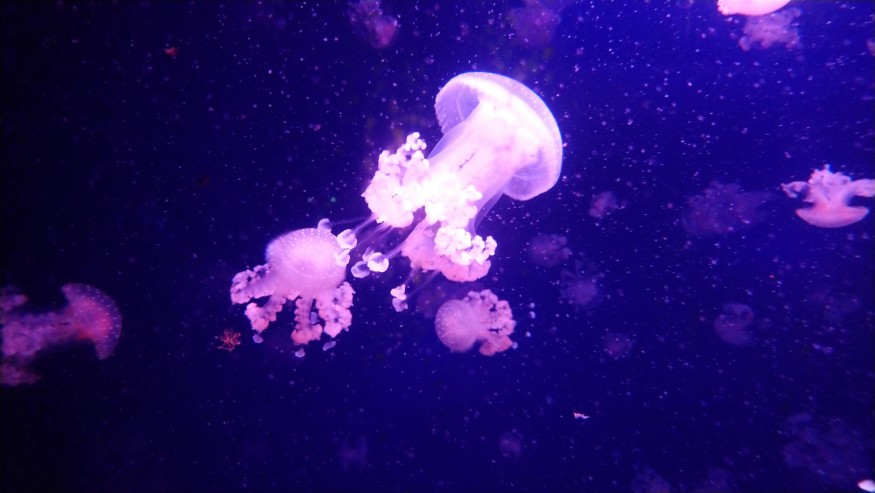
Paleocanna tentaculum marks a stunning soft-bodied fossil discovery from Quebec, revealing an Ordovician jellyfish relatively preserved from 450 million years ago. This tube-shaped polyp pushes boundaries in understanding early marine evolution during the Upper Ordovician.
How Paleocanna tentaculum Was Discovered
John Iellamo, an avid amateur collector, first encountered the fossils in 2010 while exploring near Saint-Joachim, about 50 kilometers northeast of Quebec City. He generously donated 15 slabs containing roughly 135 specimens to the Musée de paléontologie et de l'évolution in Montreal. These rocks from the Upper Neuville Formation held clusters of one to three tubes each, preserved in remarkable detail.
What sets this soft-bodied fossil apart starts with its preservation story. A sudden seafloor mudslide in low-oxygen waters buried the polyps rapidly, shielding them from scavengers and decay. Over millions of years, the fine sediment hardened into shaly limestone, locking in features rarely seen in the fossil record. Phys.org covered this find in detail back in April 2026, highlighting how such events create windows into ancient oceans.
Researchers later selected 39 prime specimens for close study, measuring lengths up to 36.9 mm and widths around 6 mm. This hands-on work revealed an annulated periderm—a ridged outer layer—along with a clear digestive tract and a ring of tentacles at one end. These traits screamed medusozoan connections, closer to today's jellyfish than many presumed ancient relatives.
Physical Features of This Ordovician Jellyfish Relative
Paleocanna tentaculum boasts a tubicolous body, meaning it lived inside a tube like some modern corals or anemones, but with distinct jellyfish vibes. The polyps grew sessile, anchored to the seafloor as epibenthic dwellers, feeding via that tentacle ring near the oral opening. Allometric growth kept their width consistent, a pattern seen in living box jellies.
Key traits include:
- Tube structure: Soft yet sturdy, up to 37 mm long, with subtle ridges for flexibility.
- Tentacle ring: Crowded around the mouth, perfect for snaring tiny prey in ancient seas.
- Internal anatomy: Visible gut trace running tube-length, hinting at simple digestion.
- Clustering habit: Often 1-3 per group, suggesting colonial living or family patches.
Sci.Newsdove into these specifics in their 2026 piece, noting how the fossils' alignment suggests minimal post-mortem movement. Unlike hard-shelled neighbors from the same rock layer, Paleocanna tentaculum's soft parts survived thanks to that anoxic blanket of mud. This rarity—soft-bodied fossils make up a tiny fraction of Paleozoic records—makes every detail a treasure.
The Ordovician jellyfish relative's body plan bridges stem and crown medusozoans. Stem forms represent early branches, while crown groups include modern jellyfish, hydras, and siphonophores. Paleocanna tentaculum slots in as basal, showing tentacle setups and tube dwelling that echo polyp stages in today's life cycles.
Research Process and Scientific Comparisons
Greta Ramirez-Guerrero, a Ph.D. student at Université de Montréal, spearheaded the study under advisor Christopher B. Cameron. McGill University's Louis-Philippe Bateman joined to compare the fossils against 69 other species—both fossils and live ones. Their paper landed in the Journal of Paleontology, cementing Paleocanna tentaculum as the first North American Ordovician soft-bodied cnidarian polyp.
They used microscopy and measurements to map growth patterns, ruling out lookalikes like ancient tubeworms or corals. Modern parallels shone brightest: the tentacle ring mimics hydrozoans, while tube rigidity nods to anthozoans. Yet overall, it leans medusozoan, refining evolutionary trees.
McGill's newsroom shared team insights in April 2026, stressing how Quebec's Saint Lawrence Lowlands rival global hotspots like Burgess Shale for fossil wealth. Low-energy deposition there favors soft-tissue grabs, explaining the haul's quality. The researchers' cross-species grid showed Paleocanna tentaculum clustering nearer to box jellies than scyphozoans or older tubes.
This work expands Paleozoic biodiversity views. The Ordovician hosted a marine explosion post-Cambrian, with cnidarians diversifying quietly amid trilobites and brachiopods. Paleocanna tentaculum proves soft-bodied players joined early, their polyps hinting at complex life cycles long before free-swimmers dominated.
Evolutionary Role of Paleocanna tentaculum
Few Ordovician jellyfish relatives endure fossilization, as soft bodies dissolve fast without special conditions. Paleocanna tentaculum fills a glaring gap, showing medusozoans rooted deep in the period. It predates many Canadian icons like Burgess Shale jellies by 50 million years, tweaking timelines.
Why does this soft-bodied fossil matter? It spotlights polyp stages—sessile youth phases that bud into swimming medusae today. Finding an adult-like polyp this old suggests life cycles stabilized early, with tubes as safe nurseries in turbulent seas.
Quebec's fossil beds keep delivering: the Neuville Formation teems with echinoderms, mollusks, and now this gem. Global parallels exist in European Ordovician sites, but North America's first soft cnidarian polyp steals the show.
Evolutionary takeaways include:
- Tentacles ring as ancient medusozoan hallmark, persisting 450 million years.
- Tube-dwelling as an adaptive edge in low-oxygen bottoms, shielding from predators.
- Bridge to modern forms, where polyps alternate with medusae for reproduction.
Paleocanna tentaculum challenges assumptions that jellyfish ancestors were purely floating. Its grounded lifestyle reveals diverse strategies in early cnidarians, enriching ocean history.
Paleocanna tentaculum Compared to Today's Jellyfish
Modern jellyfish zip through pelagic zones as medusae, pulsing bells for jet propulsion. Paleocanna tentaculum stayed put as polyps, tentacles waving for food. Yet shared DNA blueprints shine through.
Key differences and similarities:
- Lifestyle: Paleocanna tentaculum was a sessile polyp in a tube; modern jellyfish like box jellies swim freely as medusae.
- Size: Reached 37 mm long and 6 mm wide; modern bells grow to 30 cm with meter-long tentacles.
- Feeding: Tentacle ring snared plankton on the seafloor; today's trailing tentacles sting larger prey in open water.
- Environment: Thrived in low-oxygen seafloor mud; modern forms prefer oxygen-rich pelagic zones.
- Fossil Odds: Rare mud burial preserved it; modern jellyfish almost never fossilize due to high water content.
This comparison underscores polyp primacy in deep time. Today's cycles flip between polyp (tiny, attached) and medusa (big, mobile), but fossils like this suggest polyps ruled first. Over eons, budding tech evolved, letting clones launch swimmers.
PopSci is equipped with a "flailing carwash," evoking its bushy tentacles—vivid yet apt for grasping Ordovician vibes. Such visuals help picture 450-million-year-old food webs, where polyps filtered microbes amid bigger beasts.
Insights from Ordovician Jellyfish Fossils
Soft-bodied fossils demand luck: anoxia, quick cover, no burrowing pests. Paleocanna tentaculum hit that jackpot, its preservation rivaling Ediacaran softies.
- Quebec lowlands as Ordovician goldmine, rivaling Wales or China beds.
- Polyp focus shifts evolution narrative from medusae hype.
- Future digs may uncover medusa stages, completing the cycle puzzle.
Numbered preservation steps clarify the magic:
- Sudden turbidity flow drops the mud sheet.
- Oxygen dips starve bacteria, halting rot.
- Sediment compacts minerals around soft bits.
- Eons later, slabs split to reveal ghosts.
These Ordovician jellyfish relatives remind us oceans teemed invisibly long ago. Paleocanna tentaculum, through one collector's eye and scientists' lenses, rewrites quiet chapters of life's deep past.
Why Paleocanna tentaculum Changes Fossil Perspectives
Paleocanna tentaculum redefines Ordovician jellyfish views as a preserved soft-bodied fossil pinnacle. With tentacles frozen in time, it links ancient polyps to pulsing modern seas, inviting more Quebec quests into pre-Cambrian echoes.
Frequently Asked Questions
1. What is the Paleocanna tentaculum?
Paleocanna tentaculum is a newly identified basal-medusozoan species, a soft-bodied, tube-shaped polyp with a ring of tentacles, discovered in 450-million-year-old Ordovician fossils from Quebec.
2. Where was the Paleocanna tentaculum fossil found?
The fossils came from the Upper Neuville Formation near Saint-Joachim, about 50 km northeast of Quebec City in the Saint Lawrence Lowlands.
3. How old are these Ordovician jellyfish fossils?
They date to the Upper Ordovician period, approximately 450 million years ago.
© 2026 NatureWorldNews.com All rights reserved. Do not reproduce without permission.


