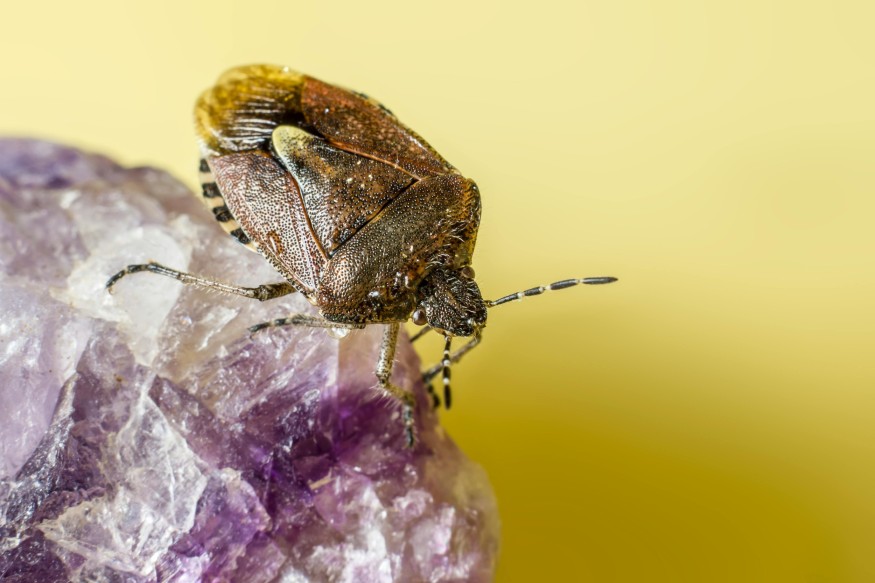
A recent find in ancient amber has unveiled a true bug sporting chelae claws, a standout trait tied to convergent evolution. This 100-million-year-old specimen from Myanmar challenges ideas about insect adaptations during the Cretaceous. Scientists used advanced scans to map its unique features, shedding light on rare predatory tools in bugs.
Chelae Claws Spark New Insights
Ancient amber often traps tiny snapshots of prehistoric life, and this one delivers a surprise. The fossil, named Carcinonepa libererrantes, belongs to the Heteroptera group, specifically Nepomorpha, known for water-linked bugs. Yet this one's front legs end in oversized chelae claws—pincer-like grips akin to crabs.
Researchers at LMU, led by Carolin Haug, examined the holotype (specimen PED 4665) with micro-CT scans. These created detailed 3D views, showing claws built for snatching prey. The bug's body mirrors modern toad bugs from the Gelastocoridae family, pointing to a life hunting on damp forest floors near streams.
What sets these chelae claws apart? Insects rarely evolve them. Prior cases appear in just three lineages, like certain beetles or scorpionflies. Shape analysis of over 2,000 arthropod appendages confirmed this as the fourth independent origin. Phys.org covered the story in April 2026, noting how the claws' form echoes decapods such as shrimps, not close insect kin.
- Claw structure highlights: Robust muscles power the pincers; joints allow precise closing.
- Size advantage: Oversized for a bug, ideal for grabbing small insects in leaf litter.
- Habitat clues: Likely thrived in humid Cretaceous spots, blending land and water edges.
This rarity underscores ancient amber's value—its resin seals organisms in near-perfect states, preserving even soft tissues.
Convergent Evolution at Play
Convergent evolution drives species toward similar solutions without shared ancestry. Here, a true bug developed chelae claws much like those in crabs or lobsters, solving prey capture across distant arthropod branches.
The fossil's claws differ from insect precedents. Earlier examples, such as in pseudoscorpions, show blockier shapes. This bug's version aligns more with marine crustaceans, suggesting parallel pressures from predation in wet environments. The name Carcinonepa nods to "crab" (carcino-) and water bugs (nepa), with "libererrantes" hinting at its wandering predatory style.
Experts suggest these tools helped snag evasive meals amid Cretaceous forests. Kachin amber, from Myanmar's northern mines, frequently yields such gems, capturing a snapshot of 100-million-year-old biodiversity. A SocPortal article echoed these points, emphasizing the claws' crab-like efficiency for terrestrial hunts.
Numbered steps in the research process reveal methodical science:
- Extraction and initial scan: Freed from amber, the specimen underwent high-res imaging.
- 3D reconstruction: Software built models to measure claw geometry.
- Comparative analysis: Matched against databases of modern and fossil grippers.
- Publication: Detailed in the journal Insects (DOI: 10.3390/insects17040431).
Such work expands convergent evolution examples, showing nature recycles effective designs. From ocean depths to forest humus, grasping pincers pop up repeatedly.
Read Also: Unveiling Doggerland: Ancient Forests of the North Sea's Lost World Revealed by Sedimentary DNA
Kachin Amber's Fossil Legacy
Myanmar's Kachin region supplies much of the world's Cretaceous amber, dated to about 100 million years ago. Tree resin from ancient forests ensnared insects, spiders, and more, hardening into golden tombs. This site has produced thousands of specimens, fueling studies on Mesozoic ecosystems.
The true bug fits into a humid, fern-filled world shared with early dinosaurs. Its chelae claws imply a niche as an ambush predator, waiting near water to pinch passing prey. Unlike fully aquatic kin, this one adapted for semi-terrestrial life, bridging bug families.
Ancient amber excels at preservation because resin repels decay bacteria while allowing air pockets for details like wing veins or leg hairs. Micro-CT tech, pioneered in recent decades, unlocks internals without damage—veins, muscles, even gut contents in some cases.
Bullet points outline amber's advantages:
- Time capsule quality: Locks life mid-motion, from mating pairs to molting stages.
- Diversity showcase: Spans insects, mites, fungi, and rare vertebrates.
- Evolutionary goldmine: Reveals traits lost in modern species, like these chelae claws.
- Ongoing yields: New finds monthly, keeping paleontologists busy.
Reports from Phys.org highlight Kachin's role in spotting oddities, like feathered dinosaurs or bizarre millipedes nearby. This bug adds to the tally, proving amber's endless surprises.
SocPortal's coverage adds that the claws' shrimp-like curve sets it apart, fueling debates on bug diets. These answers ground the excitement in facts.
Insect Predators Through Time
Tracing chelae claws back reshapes insect history. True bugs today use proboscises for sucking fluids, but fossils show experimental phases. This specimen suggests early Nepomorpha tested land grabs, evolving beyond water.
Convergent evolution peppers arthropod tales—wings in pterosaurs and bats, camera eyes in squid and vertebrates. Claws join the list, optimized for pinching soft prey without crushing shells. The bug likely ambushed ants or larvae, its claws snapping shut like sprung traps.
Modern parallels include shore bugs that stalk beaches, echoing the fossil's lifestyle. Ancient amber bridges them, proving traits flicker across eons.
Key comparisons:
- Claw Shape: Fossil Bug (Carcinonepa) - Curved, shrimp-like; Modern Toad Bug - Simple raptorial; Crab (Decapod) - Broad pincers.
- Primary Use: Fossil Bug (Carcinonepa) - Prey grasp on land; Modern Toad Bug - Surface skimming; Crab (Decapod) - Shell crushing.
- Evolution: Fossil Bug (Carcinonepa) - 4th insect origin; Modern Toad Bug - Derived legs; Crab (Decapod) - Ancient lineage.
- Habitat: Fossil Bug (Carcinonepa) - Humid forests; Modern Toad Bug - Shores; Crab (Decapod) - Marine/estuarine.
This breakdown draws from shape studies, highlighting convergent evolution's precision.
Key Takeaways on Amber Discoveries
Ancient amber keeps rewriting rules with chelae claws like those on Carcinonepa libererrantes. Convergent evolution links this bug to crabs, revealing nature's toolkit for survival. From Kachin's mines flow more clues to Cretaceous hunts, with micro-CT unlocking secrets once hidden. Ongoing research promises deeper views into insect innovation.
Frequently Asked Questions
1. What bug was found in the ancient amber?
Carcinonepa libererrantes, a true bug from the Heteroptera group with oversized chelae claws on its front legs. This marks the fourth independent evolution of such pincers in insects.
2. Where was the amber discovered?
Kachin region in northern Myanmar, a major source of 100-million-year-old Cretaceous amber from ancient tree resin.
3. Why are chelae claws unusual for insects?
Insects rarely develop true pincers like crabs; prior cases exist in only three groups. These differ via shape analysis of over 2,000 structures, resembling decapods instead.
© 2026 NatureWorldNews.com All rights reserved. Do not reproduce without permission.


