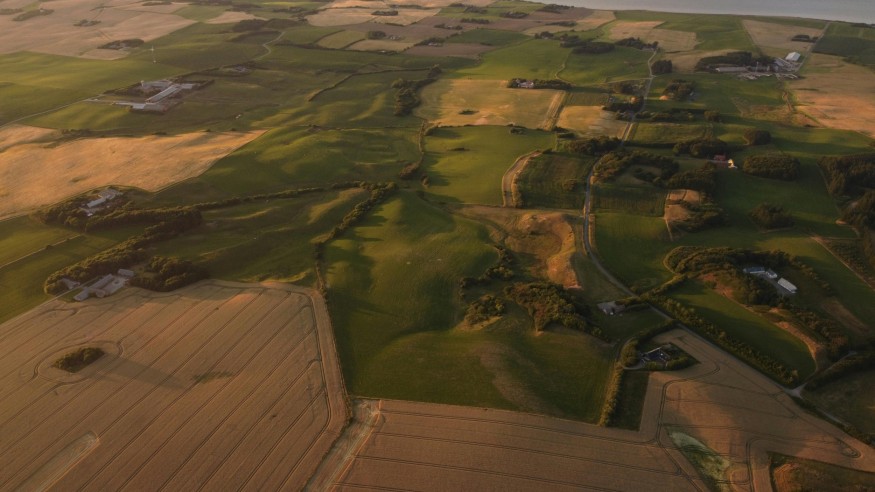
Doggerland stretched across the North Sea floor, linking Britain to Europe in a landscape of rivers and woodlands during the last Ice Age. Sedimentary DNA analysis has brought its ancient forests back to light, showing temperate ecosystems thriving over 16,000 years ago.
The Rise and Fall of Doggerland
Doggerland emerged as a sprawling plain after the glacial maximum around 20,000 years ago, when sea levels dropped over 120 meters. This landmass, roughly the size of modern-day Denmark, featured rolling hills, wetlands, and fertile valleys that supported life amid widespread ice.
- Key geographical features included the Southern River, a major waterway spanning 20 miles in what is now southern Doggerland.
- Early hints came from fishermen hauling up mammoth bones, antlers, and barbed harpoons from their nets, sparking curiosity about this submerged realm.
A University of Warwickstudy, detailed in a March 2026 PNAS paper, used sedimentary DNA from North Sea cores to map these features precisely. Rising seas from melting ice sheets began eroding Doggerland around 10,000 years ago, with catastrophic events like the Storegga Slide tsunami hastening its end by 8,200 years ago.
Full submergence occurred gradually, leaving Doggerland buried under silt by 6,000–7,000 years ago. This timeline explains gaps in Mesolithic archaeology on Britain's coast, as rising waters displaced communities over generations rather than overnight.
Sedimentary DNA: Unlocking Doggerland's Ancient Forests
Sedimentary DNA, or sedaDNA, extracts genetic traces from mud layers without disturbing fossils. Researchers analyzed 252 samples from 41 marine cores off England's coast, targeting the ancient Southern River valley. This approach revealed DNA from plants long thought absent during peak Ice Age cold.
Ancient forests dominated southern Doggerland around 16,000 years ago, with species like oak, elm, and hazel forming dense canopies. Birch and pine added to the mix, while warm-adapted lime trees (Tilia) appeared millennia before British pollen records suggested.
- Oak and elm provided sturdy timber and nuts, anchoring woodland ecosystems.
- Hazel shrubs offered early fruits, attracting wildlife and foragers.
- Lime trees, rare in Ice Age contexts, hinted at sheltered microclimates shielding them from tundra conditions.
These findings, highlighted in a Live Science article from March 2026, upend views of Doggerland as icy wasteland. Instead, south-facing valleys trapped warmth, fostering temperate pockets that recolonized northern Europe faster than models predicted.
Wildlife Thriving Amid Doggerland's Woodlands
Beyond trees, sedimentary DNA painted a lively picture of fauna roaming these ancient forests. Wild boars rooted through undergrowth, red deer grazed clearings, and brown bears prowled for prey. Massive aurochs, now-extinct cattle ancestors, lumbered across the landscape, their DNA preserved in the same sediments.
This biodiversity supported a robust food chain:
- Herbivores like deer and aurochs sustained predators such as bears.
- Boars scavenged roots and acorns, competing with early human hunters.
- Birds and smaller mammals filled niches, evidenced by trace genetic signals.
Mesolithic people likely followed these animals, using Doggerland as a migration highway between Britain and the continent. Harpoons and tools dredged from the seabed suggest seasonal camps, where families exploited river fish and forest game. The forests' richness made Doggerland more than a bridge—it was a thriving hub.
How Doggerland Submerged: A Step-by-Step Timeline
Doggerland's fate unfolded over millennia, driven by climate shifts post-Ice Age.
- 14,000–12,000 years ago: Glaciers retreated, exposing Doggerland fully; tundra gave way to pioneer birch-pine woods.
- 12,000–10,000 years ago: Temperate ancient forests expanded in the south, with oak and elm joining the canopy.
- 10,000–8,000 years ago: Sea levels rose steadily at 1–2 meters per century, flooding lowlands and turning forests to marshes.
- 8,200 years ago: The Storegga tsunami, triggered by a Norwegian landslide, surged 20 meters high, devastating coastal woods.
- 7,000 years ago onward: Final inundation buried remnants under the North Sea, preserving DNA in oxygen-poor sediments.
This sequence, refined by core dating, shows communities adapted slowly, retreating inland as waters advanced. A ScienceDaily release from April 2026 covered the Warwick team's timeline, emphasizing how sedaDNA dated these shifts accurately.
Read Also: Greenland's Prudhoe Dome Melted Completely 7,000 Years Ago—Greenland Ice Sheet at Risk Again
Challenges and Methods in Studying Submerged Forests
Extracting sedimentary DNA from North Sea cores demands precision. Samples came from depths up to 50 meters, drilled during oil surveys and research cruises. Labs filtered mud for microscopic genetic fragments, amplifying them via PCR to identify species.
Challenges included:
- Contamination risks from modern microbes, mitigated by sterile protocols.
- Fragmented DNA degrading over millennia, requiring advanced sequencing.
- Interpreting mixed signals from river-transported sediments.
The study's scale—covering a 20-mile valley—set a benchmark for sedaDNA in marine archaeology. It bypassed fossil scarcity, as Doggerland's peat bogs and silts rarely yield intact bones. Future expeditions could target human DNA, revealing population movements.
Rewriting Ice Age History with Doggerland Evidence
Doggerland's ancient forests force a rethink of Ice Age habitability. Temperate woodlands persisted in refugia, allowing species to leapfrog north ahead of warming trends. This explains why Britain's post-glacial flora mirrors continental patterns despite isolation.
For archaeologists, the findings bridge Mesolithic gaps. Hunter-gatherers navigated shrinking land, perhaps using boats as forests drowned. Doggerland emerges as a cradle for shared cultures, influencing tool styles from Scotland to Denmark.
Modern parallels arise in climate-threatened coasts, where rising seas mirror Doggerland's story. SedaDNA techniques now apply globally, probing lost landscapes under the Baltic or Black Sea.
Ongoing Mysteries and Future Doggerland Exploration
Questions linger about Doggerland's full extent. Northern areas may have stayed tundra-like, contrasting southern forests. Did humans dwell year-round, or seasonally migrate? Upcoming cores from Dutch and Norwegian waters could answer these.
Technologies like underwater drones and 3D seismic mapping aid the hunt. Collaborations between universities and oil firms promise more samples, potentially unearthing settlements or art.
Frequently Asked Questions
1. What Was Doggerland?
Doggerland was a now-submerged landmass connecting Britain to Europe beneath the North Sea. It featured rivers, hills, and valleys during and after the last Ice Age, supporting life until rising seas claimed it around 7,000 years ago.
2. What Trees Grew in Doggerland's Ancient Forests?
Temperate species like oak, elm, hazel, birch, pine, and lime (Tilia) thrived there over 16,000 years ago. These forests surprised researchers, appearing millennia earlier than British pollen records indicated.
3. How Did Sedimentary DNA Reveal These Forests?
Scientists analyzed 252 sediment samples from 41 North Sea cores, extracting ancient DNA preserved in mud. This sedaDNA method mapped ecosystems without fossils, confirming woodlands in southern Doggerland's Southern River valley.
© 2026 NatureWorldNews.com All rights reserved. Do not reproduce without permission.


