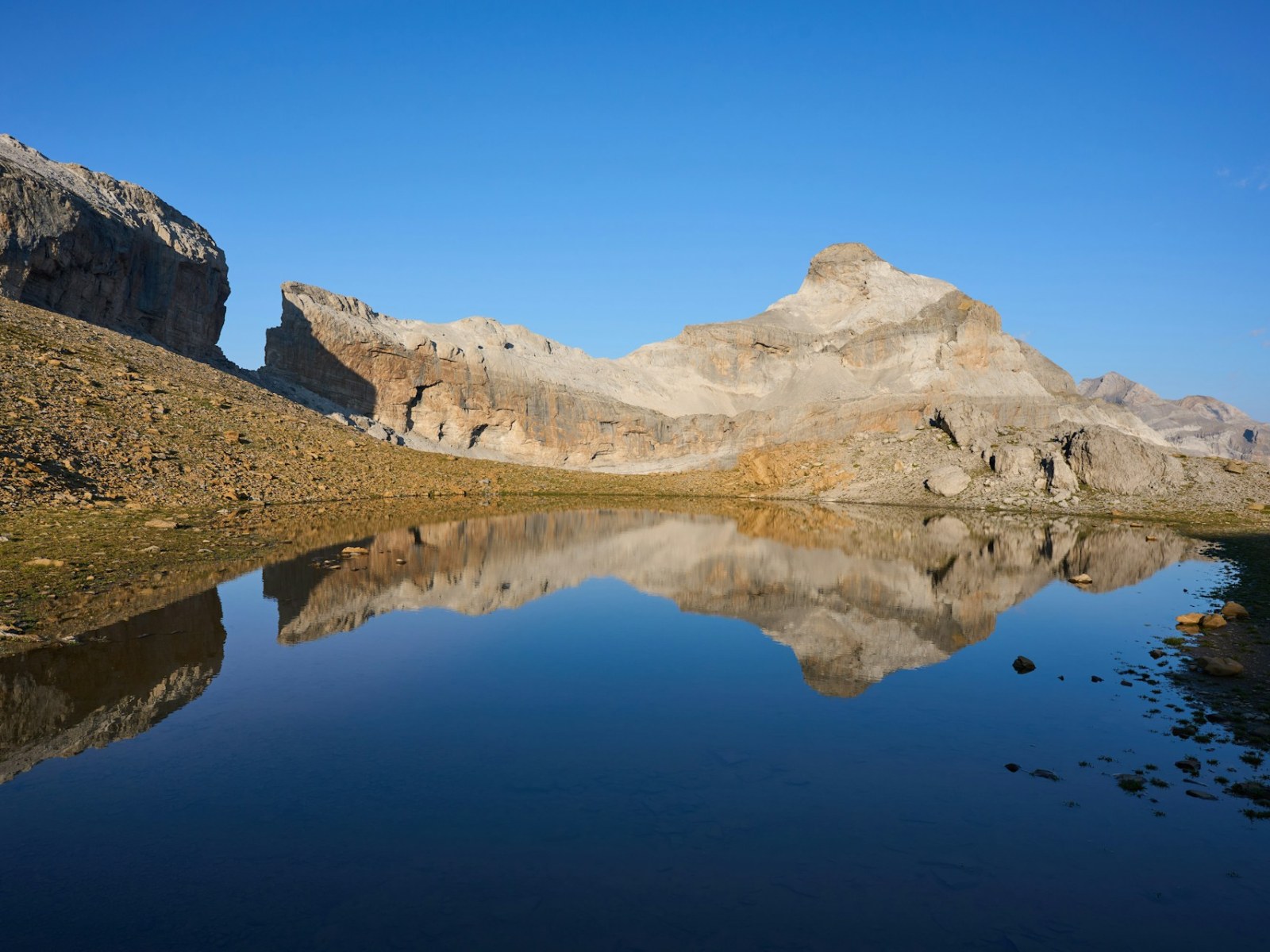
The Pyrenees stretch for hundreds of kilometers between France and Spain, yet they often feel quieter and less managed than many other European mountain regions.
The landscapes are large, the valleys are deep, and the distances between places can be significant. While trails and huts exist, the overall experience feels less polished than in more developed alpine areas. Hiking here often feels more direct and less structured, which is exactly what attracts many walkers.
The Pyrenees do not try to simplify the mountains. They simply allow people to move through them.
The Mountains Feel Less Organized
In many alpine regions, hiking routes are carefully structured. Villages appear at predictable intervals, huts sit exactly where hikers expect them, and the trail network feels deliberately arranged. In the Pyrenees, things are often less precise.
Trails still exist and are usually marked, but the landscape does not feel organized around them. Valleys stretch long distances before reaching settlements. Mountain passes connect remote sections of terrain. The experience feels more like crossing a mountain range than moving between curated hiking points.
This lack of organization creates a stronger sense of independence while walking.
Distances Shape the Experience
The Pyrenees are wide mountains. Valleys can be long and remote, and routes often require sustained walking between stops. Even when the terrain itself is not extremely technical, the distance between places becomes part of the challenge.
This changes how hikers approach each day. Planning matters more, and pacing becomes important. You are not just hiking for scenery. You are moving from one part of the range to another.
Because of this, finishing a day often feels earned rather than simply completed.
Villages Feel Functional
Mountain villages in the Pyrenees tend to feel like working communities rather than hiking hubs. Services exist, but they are not always designed around tourism.
Shops may close early. Restaurants might operate on local schedules. Transport connections can be limited. For hikers, this means adapting to the rhythm of the region rather than expecting the region to adapt to them.
While this can require more planning, it also keeps the experience grounded in real places rather than purely recreational infrastructure.
Trails Follow Traditional Routes
Many Pyrenean trails follow paths that have been used for generations by shepherds, traders, and farmers. These routes were designed to connect valleys and pastures rather than to create scenic hiking loops.
As a result, the trails often feel practical. They climb where the land allows, descend into valleys where settlements exist, and cross passes that have been used for centuries.
Walking these paths feels like participating in a long history of movement through the mountains rather than exploring a landscape designed specifically for hikers.
The Terrain Stays Honest
The Pyrenees rarely hide their effort. Long climbs remain long, and descents can be just as demanding. The terrain does not soften itself for convenience.
However, the challenge usually comes from endurance rather than technical complexity. Most routes involve steady walking over many hours rather than exposed scrambling or technical climbing.
This creates a type of difficulty that builds gradually instead of arriving all at once.
Weather and Distance Require Attention
Weather in the Pyrenees can change quickly, especially in higher sections of the range. Combined with longer distances between stops, this encourages hikers to remain aware of their surroundings.
You cannot rely entirely on infrastructure to solve problems. Instead, you watch conditions, pace yourself carefully, and make decisions based on the day's circumstances.
This responsibility adds weight to the experience without making it extreme.
A Different Rhythm of Walking
Hiking in the Pyrenees tends to develop a slower rhythm than in many alpine regions. Days are defined by distance and terrain rather than by famous viewpoints or landmarks.
You begin to think less about individual moments and more about the overall journey. Progress becomes the main measure of the experience. Each pass crossed and each valley reached adds to the sense of movement through the range.
For many hikers, this rhythm is one of the most rewarding parts of the Pyrenees.
Why the Experience Feels Authentic
Many people describe the Pyrenees as feeling more authentic than other mountain destinations. What they often mean is that the region does not reshape itself around the hiking experience.
The trails exist because they always have. Villages function according to their own routines. The mountains remain large and relatively quiet.
Even organized options like Pyrenees hiking tours do not fundamentally change this character. They help with planning and logistics, but the landscape itself stays the same.
A Mountain Range That Rewards Commitment
The Pyrenees may not offer the same level of infrastructure or predictability as some alpine regions, but that is part of their appeal. Walking here requires attention, planning, and steady effort.
For hikers who enjoy that kind of experience, the Pyrenees provide something rare in Europe. A mountain range where the landscape still shapes the journey more than the system around it.
© 2026 NatureWorldNews.com All rights reserved. Do not reproduce without permission.


