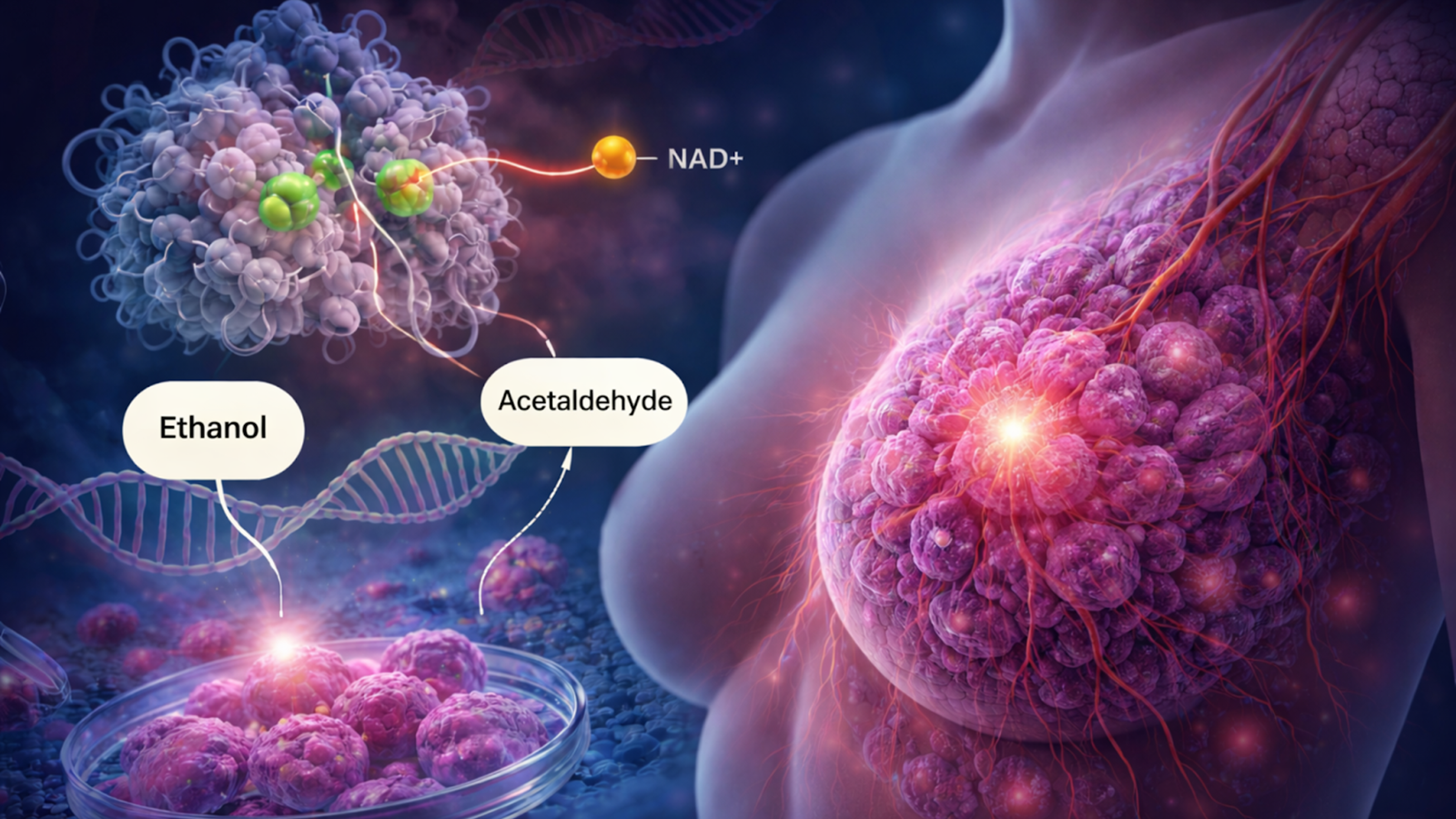
ADH1A is a gene that encodes the alpha subunit of class I alcohol dehydrogenase, which is a group of zinc-dependent enzymes that act as the primary hepatic pathway. This pathway relies on the enzyme's ability to utilize NAD+ as a coenzyme, catalyzing the oxidation of ethanol into toxic acetaldehyde.
While its primary role is to prepare ethanol for elimination in the liver, ADH1A also plays a role in extrahepatic tissues, particularly in the mammary glands. Recent studies link ADH1A's expression levels directly to tumor progression.
This article explores how ADH1A influences breast cancer development and its regulation of the Wnt/β-catenin pathway.
Molecular and Enzymatic Function of ADH1A
As it is a homodimer composed of two alpha subunits, ADH1A requires zinc ions to stabilize the substrate at the active site, and NAD+ accepts electrons.
Ethanol Oxidation and Redox Balance
The oxidation of ethanol into acetaldehyde is the most recognized enzymatic function of ADH1A. In this process, NAD+ is reduced to NADH. ADH1A modulates the ratio of NAD+ and NADH to help maintain the metabolic equilibrium required for normal cellular processes. While this enzymatic activity of ADH1A handles high-volume alcohol clearance in the liver, in the mammary glands, this enzymatic activity helps manage lower concentrations of endogenous (internal) alcohols.
Tissue-Specific Expression and Retinoid Metabolism
Expression of ADH1A in healthy mammary glands is critical for the Retinoic Acid (RA) signaling pathway. ADH1A facilitates the oxidation of retinol (Vitamin A) into retinaldehyde.
Retinaldehyde is converted into retinoic acid, which is a powerful ligand. Retinoic acid enters the cell to regulate genes involved in the following:
- Cellular differentiation to keep cells in their specialized, non-cancerous state
- Natural death of damaged or mutated cells
- Prevention of rapid, unchecked cell division that leads to tumor formation
Contribution to Cellular Metabolism
ADH1A acts as a metabolic "buffer," ensuring a balance between cellular concentrations of retinol and its metabolites. Recent transcriptomic and proteomic data reveal that high levels of ADH1A are a hallmark of healthy, differentiated breast cells.
When this enzymatic function is disrupted, the loss of retinoic acid production and the imbalance in the NAD+/NADH ratio create a metabolic environment that actively supports cancer growth.
ADH1A and Breast Cancer Progression
High expression of ADH1A maintains cellular order in healthy mammary tissues. However, this expression is downregulated with the development of cancer. This loss of protein level is strongly correlated with increased tumor grade.
Downregulation in Triple-Negative Breast Cancer (TNBC)
ADH1A expression is particularly low in Triple-Negative Breast Cancer (TNBC), the most aggressive subtype of the disease. TNBC lacks estrogen, progesterone, and HER2 receptors, making it difficult to treat the disease. The significant reduction of ADH1A in these tumors suggests that the loss of this enzyme is a key step in allowing TNBC cells to become more "stem-like" and resistant to traditional therapies.
The Wnt/β-catenin Signaling Link
In a healthy cell, ADH1A helps keep the Wnt/β-catenin pathway in check. This pathway ensures cells only divide when they are supposed to. Reduced ADH1A levels lead to activation of the Wnt/β-catenin pathway. This activation instructs the cancer cells to detach from their original location and move. The cancer cells can now invade surrounding tissues and travel to distant organs.
ADH1A as a Prognostic Marker
Because of the link between ADH1A levels and the aggressiveness of the tumor, ADH1A serves as a powerful prognostic marker. Patients with higher levels of ADH1A in their tumor tissue generally have:
- Longer overall survival (OS) and disease-free survival (DFS)
- A reduced likelihood of the cancer spreading
- A higher probability of responding to standard care
Conversely, the silencing of the ADH1A gene can be used to identify high-risk patients who may require more intensive or targeted monitoring.
Researchers and clinicians use an ADH1A ELISA kit to measure the concentration of ADH1A within breast tissue samples to determine how aggressive the tumor is.
AAA Biotech is a trusted name for well-validated ADH1A ELISA kits offering specificity, reproducibility, and high sensitivity, enabling researchers to accurately quantify metabolic markers and improve our understanding of breast cancer progression.
© 2026 NatureWorldNews.com All rights reserved. Do not reproduce without permission.


