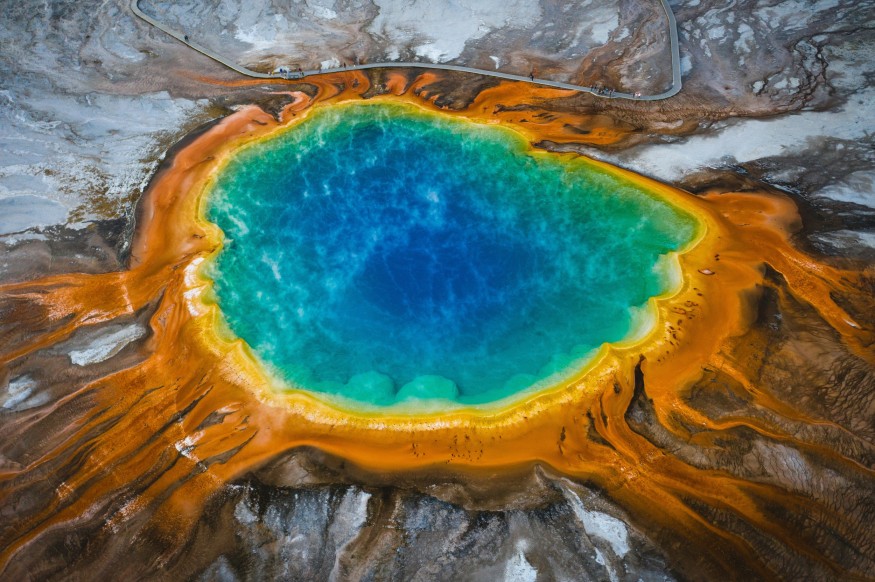
Supervolcanoes stand out for their sheer power, capable of reshaping landscapes and climates in ways regular volcanoes cannot match. The Yellowstone supervolcano sits at the heart of this discussion, with its massive caldera drawing eyes worldwide over concerns about volcanic eruption risk. This active system in Wyoming fuels geysers and hot springs while sparking questions about what might come next.
People often wonder if the ground could split open tomorrow. Scientists monitor every rumble closely, balancing the site's dramatic history against today's quiet signals. Understanding the Yellowstone supervolcano means digging into its past blasts and current stirrings.
What Makes Yellowstone a Supervolcano?
Supervolcanoes differ from familiar peaks like Mount Fuji or Vesuvius because they lack a classic cone shape. Instead, they form broad calderas after explosive events collapse the surface. Yellowstone's caldera stretches 30 miles by 45 miles, a scar from ancient fury.
The Volcanic Explosivity Index, or VEI, rates eruptions by volume and height of ejecta. Anything hitting VEI 8 qualifies as super, blasting out over 1,000 cubic kilometers of material. Mount St. Helens in 1980 clocked VEI 5—devastating, but a fraction of supervolcano scale.
Beneath Yellowstone lies a vast magma chamber, partially molten at about 5-15% liquid. This mushy reservoir feeds the park's thermal features without building pressure for a big bang right now. Heat rises through rock cracks, powering Old Faithful's reliable shows. HowStuffWorks dives into scenarios where such systems wake up, painting vivid pictures of ash clouds towering miles high. That kind of event dwarfs modern disasters.
Yellowstone Supervolcano Eruption History and Risks
Yellowstone's resume includes three supereruptions over 2 million years.
First came Huckleberry Ridge around 2.1 million years ago. It hurled 2,500 cubic kilometers of ash and pumice, coating much of North America. Layers of that fallout still mark soil profiles today.
Next, about 1.3 million years ago, the Mesa Falls eruption carved a smaller footprint but still reshaped the region. Ash traveled far, preserving fossils in its wake.
The Lava Creek blast 631,000 years ago defined the current caldera. It ejected 1,000 cubic kilometers, with fine ash reaching Pacific coasts and even traces in ocean sediments. Smaller lava flows followed until 70,000 years ago, filling parts of the basin.
No supereruptions match human timelines. Native American tribes recorded oral histories of smaller events, but nothing caldera-scale. Geologists map these layers through drilling and satellite imagery.
Monitoring networks blanket the park with seismometers, GPS, and gas sniffers. Over 3,000 quakes hit annually, mostly tiny swarms under 3.0 magnitude. Here's a breakdown of key risks:
- Supereruption (VEI 8): Extremely low probability, about 1 in 730,000 annually; no signs of imminent magma buildup for a cataclysmic blast.
- Lava flows: More likely than supereruptions, potentially every few thousand years; confined to park areas with non-explosive outpourings.
- Hydrothermal explosions: Occasional events from steam pressure, like the 1989 Porkchop Geyser blast; localized danger with minor reach.
- Earthquake swarms: Routine, 1,500-3,000 quakes yearly, mostly below magnitude 3; monitored but rarely damaging.
- Pyroclastic flows or lahars: Hypothetical for major events; high-risk zones within 20-50 km of caldera, but no precursors present.
- Ashfall: Primary regional threat from any eruption; could affect Midwest agriculture and aviation, diminishing with distance.
"Is Yellowstone overdue?" misleads because volcanoes ignore calendars. Intervals between big events span 600,000 to 1.1 million years, with no fixed rhythm. USGSestimates supereruption odds at 1 in 730,000 per year—less likely than asteroid hits.
Current Volcanic Eruption Risk and Future Outlook
The magma body cools slowly, with upper parts solidifying. Deep injections keep it warm but dilute. No fresh hotspots signal trouble. Satellite InSAR maps surface changes down to millimeters. Public dashboards update real-time, letting visitors track without panic.
Geologic odds say yes to future activity, someday. Building a supereruption demands rapid molten buildup, unseen for millennia. Warning signs ramp gradually: escalating quakes, rapid swelling, gas spikes. Weeks to months of alerts precede any climax.
Proximity kills outright—within 100 km, pyroclastic flows incinerate everything. Ash piles feet-deep across Midwest states, collapsing roofs and halting roads. Air travel grounds for months; engines choke on grit. Farms suffocate under blankets, slashing yields for years. Sulfur aerosols cool Earth 3-5°C, mimicking volcanic winters.
National Geographic recently highlighted how Yellowstone's system might rev faster than thought, based on uplift patterns. Yet experts stress these signs stay far from critical thresholds. Vice covered fresh research easing doomsday fears, noting stable patterns despite buzz.
Volcanic eruption risk comparison:
- Supereruption: Occurs 1 in 730,000 years with continental ash reach and global cooling severity.
- Lava Flow: Every 1/10,000 years, local 100 km reach, property damage severity.
- Earthquake Swarm: Yearly, park-wide reach, minor shakes severity.
- Hydrothermal Blast: Every few decades, site-specific reach, burns and ejecta severity.
Yellowstone Supervolcano Facts and Volcanic Eruption Risk Today
Millions trek through Yellowstone yearly, marveling at its restless beauty. The Yellowstone supervolcano hums beneath, monitored relentlessly to keep volcanic eruption risk in check. Data-driven vigilance ensures visitors grasp the odds—low for drama, high for wonder. Check USGS feeds for the latest ground truth on this living giant.
Frequently Asked Questions
1. When was Yellowstone's last major eruption?
The Lava Creek supereruption occurred 631,000 years ago, forming the current caldera. Smaller lava flows continued until about 70,000 years ago.
2. Is the Yellowstone supervolcano overdue for an eruption?
No—volcanoes lack predictable schedules. Gaps between past events varied widely, and current monitoring shows no signs of buildup. Annual supereruption odds remain 1 in 730,000.
3. What causes volcanic eruption risk at Yellowstone?
Risks stem from its active magma chamber, fueling geysers and quakes. Categories include supereruptions (low probability), lava flows, hydrothermal blasts, and ashfall.
© 2026 NatureWorldNews.com All rights reserved. Do not reproduce without permission.


