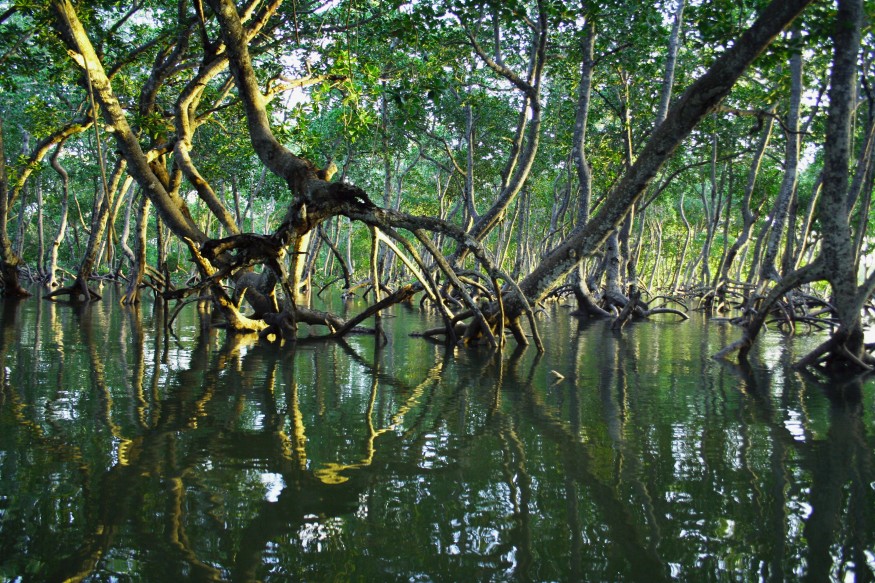
Mangrove forests line coastlines in tropical and subtropical regions, forming intricate mangrove ecosystems that shield shores from relentless waves and storms. These coastal protection forests anchor sediments and dampen flood surges, proving essential where human settlements meet the sea.
What Makes Mangrove Forests Unique?
Mangrove forests grow where rivers meet salty ocean waters, creating a dynamic mangrove ecosystem unlike any other woodland. Salt-tolerant trees like red mangroves send down prop roots that grip muddy bottoms, while black mangroves sprout snorkel-like pneumatophores to breathe in waterlogged soils. These adaptations allow coastal protection forests to thrive amid daily tides, spanning about 150,000 square kilometers worldwide, from the Gulf of Mexico to the Sundarbans in Bangladesh.
The roots interlock into living nets, trapping silt carried by currents and building up land over time. This process elevates shorelines naturally, countering erosion that can swallow beaches in mere years. In places like Florida's Everglades, these ecosystems filter pollutants from upstream runoff, keeping coastal waters clearer for marine life. Dense stands often stretch hundreds of meters inland, their canopies sheltering the tangle below from sun and wind.
Beyond structure, mangroves cycle nutrients efficiently. Fallen leaves feed crabs and fish, while bacteria in the mud break down organics, recycling energy through the food web. This self-sustaining setup makes mangrove ecosystems resilient hubs, supporting everything from microscopic plankton to apex predators like crocodiles. No other forest matches this blend of terrestrial strength and aquatic flexibility, positioning coastal protection forests as frontline guardians against nature's fury.
How Mangroves Deliver Coastal Protection
Waves crashing into mangrove roots lose momentum fast—the tangled barrier can slash wave height by 50 to 75 percent over just 100 meters of forest. In coastal protection forests, this dissipation turns destructive surges into manageable ripples, sparing inland villages from inundation. During Cyclone Sidr in Bangladesh, for instance, areas fringed by intact mangroves saw far less devastation than cleared zones nearby.
Roots also bind sediments, preventing the scouring that strips away beaches and cliffs. A single hectare of mangroves might trap thousands of tons of mud annually, steadily raising ground levels against encroaching tides. This sediment capture proves vital in deltas, where rivers deposit silt that mangroves lock in place, forming stable barriers. Studies from Vietnam highlight how 200-meter-wide belts reduce erosion by up to 80 percent compared to bare shores.
Storms amplify these benefits. Mangroves blunt wind-driven waves, lowering flood heights by meters in extreme events. Their flexibility lets trees bend without snapping, unlike rigid seawalls that often crumble. In the Caribbean, post-hurricane surveys reveal that coastal protection forests cut inland water spread by half, protecting homes, roads, and farms. Even everyday tides benefit, as roots slow currents enough to let sand settle rather than wash away.
These mechanics extend to tsunamis too. Historical data from the 2004 Indian Ocean event shows villages behind mangroves endured half the casualties and damage of exposed ones. The forest's layered defense—roots below, trunks mid-level, branches above—absorbs energy across heights, making mangrove ecosystems unmatched for broad-spectrum shielding. Engineers now mimic this in hybrid designs, pairing nature with minimal infrastructure for amplified results.
Biodiversity Haven in Coastal Protection Forests
Within the mangrove ecosystem, roots cradle nurseries for juvenile fish, shrimp, and crabs, boosting populations that sustain global fisheries worth billions. Over 1,000 fish species rely on these sheltered waters to grow safely away from open-ocean hunters. Coastal protection forests here pulse with life, from mangrove pitta birds flitting through branches to mudskippers hopping at low tide.
Invertebrates dominate the understory, with fiddler crabs aerating soils and oysters encrusting roots, forming living filters. This diversity stabilizes the whole system—pollinators like bees visit flowers, ensuring seed production for expansion. Birds such as herons and egrets hunt amid the maze, while mammals like otters prowl for clams, tying coastal food chains together.
Seasonal rhythms enhance this richness. During monsoons, swollen rivers flush nutrients into the ecosystem, sparking algal blooms that feed the base of the web. Dry spells concentrate prey, drawing migrants. In Southeast Asia's mangroves, over 200 bird species nest yearly, many endangered elsewhere. This biodiversity not only bolsters resilience—diverse species recover faster from disturbances—but also supports human livelihoods, as fishers harvest abundant stocks near shore.
Mangrove soils lock away CO2 at rates four times higher than rainforests, with roots preventing release even after trees die. Researchers in Brazil explored these carbon sinks in depth. Protecting this web ensures coastal protection forests endure, delivering ecological and economic returns for generations.
Threats Facing Mangrove Ecosystems Today
- Shrimp aquaculture razes vast tracts yearly, converting mangrove ecosystems into ponds that yield short-term profits but long-term losses. In Thailand alone, such clearing halved mangrove cover since the 1960s, exposing shores to fiercer erosion.
- Urban expansion paves over roots for ports and resorts, fragmenting coastal protection forests into isolated patches that weaken overall defense.
- Pollution chokes regeneration—oil spills coat roots, while fertilizers trigger algal overgrowth that starves oxygen from waters.
- Climate shifts worsen matters, with warmer seas raising salinity beyond tolerance, fiercer cyclones uprooting stands, and sea-level rise drowning low-lying forests unless sediments keep pace.
- Overharvesting for fuel or fodder slows natural spread, while invasive species outcompete natives in disturbed soils. In the Pacific, unchecked logging leaves coastlines battered by routine swells, hiking repair costs exponentially.
A Gentian blog lays out these human pressures clearly. The IUCNRed List tracks mangrove declines globally. Yet awareness grows. Satellite mapping reveals losses precisely, guiding targeted interventions. Community patrols in the Philippines have stabilized local mangrove ecosystems, blending tradition with tech for revival.
Reviving Coastal Protection Forests for Tomorrow
Restoration efforts plant seedlings across thousands of hectares annually, from Miami's urban fringes to Myanmar's deltas. Success hinges on matching species to sites—red mangroves seaward, white mangroves inland—yielding 80 percent survival rates in well-planned projects. Hydrological tweaks, like reopening blocked creeks, let tides nourish new growth, accelerating maturity to protective levels in five to ten years.
Communities lead many initiatives, harvesting honey or crabs sustainably to fund upkeep. In West Africa, partnerships with NGOs have replanted 10,000 hectares, restoring fish yields and storm buffers alike. Policy shifts protect 40 percent of remaining mangroves through reserves, curbing illegal clearing. Innovations like drone seeding speed coverage, while carbon credit schemes incentivize landowners.
Early results impress. Restored belts in Indonesia withstood recent typhoons, sparing infrastructure damage. Blending mangroves with dunes or reefs creates layered defenses, outperforming any single approach. An Omicsonline piece highlights ecological gains from such work in Vietnam. Scaling these efforts secures mangrove ecosystems as enduring coastal protection forests, blending resilience with prosperity for vulnerable shores.
Frequently Asked Questions
What are mangrove forests?
Mangrove forests consist of salt-tolerant trees and shrubs that thrive in coastal intertidal zones, forming dense mangrove ecosystems with specialized roots that stabilize muddy shores.
1. How do mangroves protect coastlines?
Mangroves slow waves and storm surges through their tangled roots, reducing erosion and flood heights by up to 75% while trapping sediments to build land against rising seas.
2. Why are mangrove ecosystems important for biodiversity?
These ecosystems serve as nurseries for fish, crabs, and birds, supporting over 1,000 fish species and linking marine and terrestrial food webs for resilient coastal life.
3. What happens if mangroves are destroyed?
Deforestation exposes shores to severe erosion and storms, as seen in Thailand where losses doubled flood risks and halved fisheries.
© 2026 NatureWorldNews.com All rights reserved. Do not reproduce without permission.


