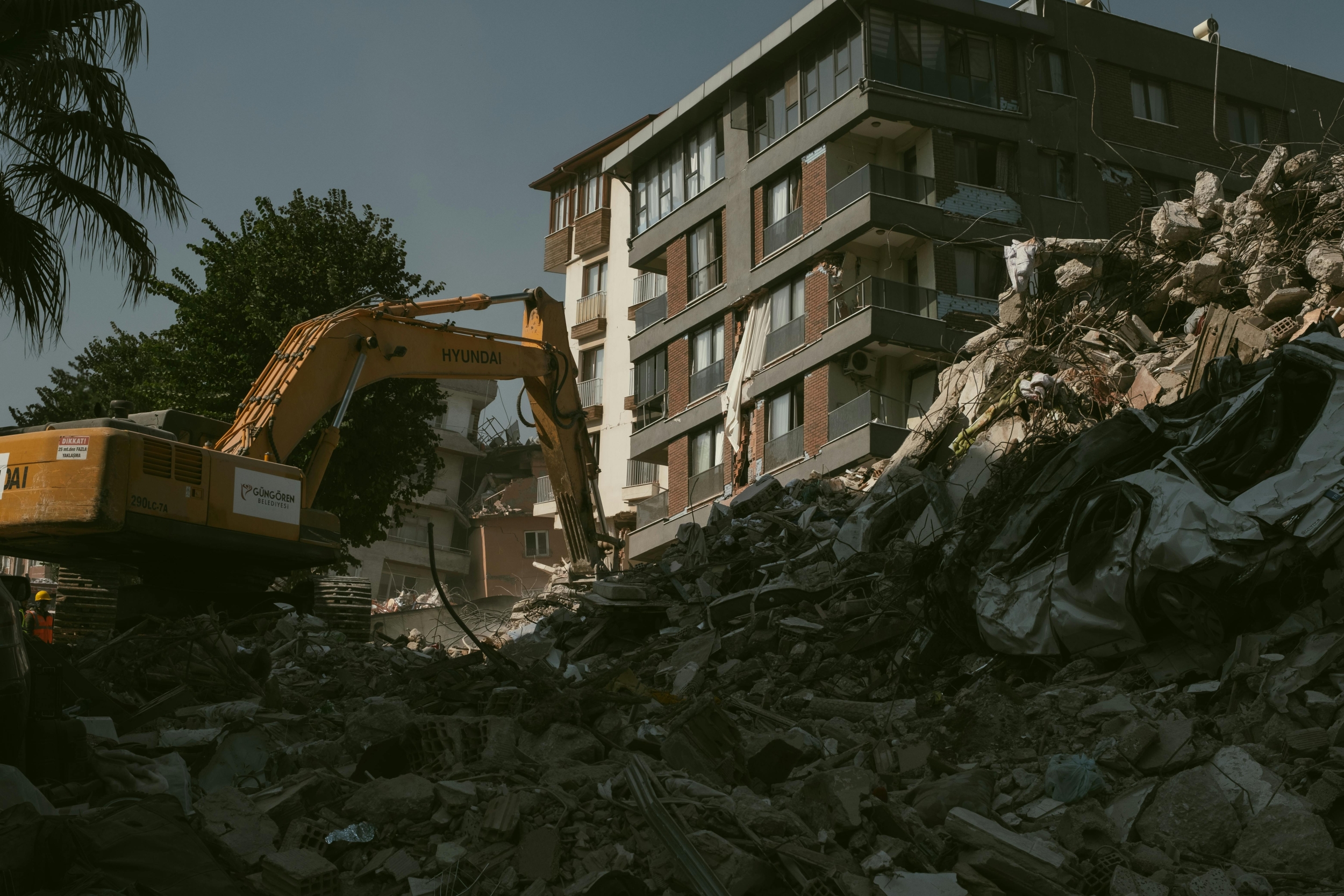
Advanced ground motion simulations provide critical earthquake predictions for the Hayward fault, mapping out potential shaking patterns in the densely populated Bay Area. These models help authorities and residents prepare for a long-overdue seismic event on this key fault line.
Recent efforts by researchers at Lawrence Livermore National Laboratory (LLNL) and Lawrence Berkeley National Laboratory (LBNL) ran dozens of scenarios on supercomputers. By varying rupture details like starting points and slip distributions, they pinpoint risks from magnitude-7 quakes. This work builds on USGS data, offering clearer views of how geology shapes shaking intensity across Oakland, Berkeley, and beyond.
Understanding the Hayward Fault Threat
The Hayward fault stretches about 74 miles through California's East Bay, from San Pablo Bay south to Fremont. As a right-lateral strike-slip fault in the San Andreas system, it builds stress slowly but releases it violently. The last big rupture hit in 1868, a magnitude-7 shaker that leveled parts of San Francisco and Hayward.
Today's urban sprawl heightens the stakes. The fault runs directly under neighborhoods, schools, and infrastructure. USGS estimates put the odds at one in three for a magnitude-6.7 or larger event in the next three decades. When linked with nearby faults like Rodgers Creek, that jumps to 72% by 2043.
Key traits of the Hayward fault include:
- Creeping sections: Northern parts slide slowly, reducing some buildup but complicating predictions.
- Locked zones: Southern segments store maximum stress, prime for rupture.
- Urban exposure: Over 2 million people live or work near the trace.
Phys.orgcovered these details in their April 2026 article, highlighting how overdue status drives urgent modeling.
Inside Ground Motion Simulations
Ground motion simulations use physics-based computing to mimic quake waves traveling through real 3D earth layers. LLNL and LBNL teams deployed the SW4 code on Department of Energy exascale machines. They simulated 50 magnitude-7 ruptures, split between stochastic and hybrid types.
Parameters varied across five hypocenter spots, different slip patterns, and rupture speeds. USGS Community Velocity Models (version 08.3.0) fed in basin depths, rock types, and topography. Outputs cover long-period motions (over 1-2 seconds) and broadband up to 5 Hz—vital for engineering designs.
These aren't guesses; validation came from the 2007 magnitude-4.4 Oakland quake. Simulations matched observed shaking better than older methods, thanks to finer geology details like sedimentary basins.
Steps in building these ground motion simulations:
- Generate kinematic rupture models with tools like RuptGen.
- Propagate waves through 3D velocity structures.
- Compare against empirical ground-motion prediction equations (GMPEs).
- Analyze scatter from site effects and directivity.
A LLNL release from late 2025 detailed this supercomputing push, noting reduced uncertainty in forecasts.
Read Also: How Severe Will the 2026 Tornado Season Be? What Forecasters Are Expecting and How to Prepare
Earthquake Predictions: Shaking Hotspots Revealed
Earthquake predictions from these runs show no uniform shake-out. Eastern hills like Orinda and Moraga amplify motions due to fractured sedimentary rocks—up to 50% stronger than the west side's firmer bedrock. Livermore Valley's basin traps waves, stretching durations past two minutes and boosting intensities.
Rupture directivity adds danger: when the break races forward, it flings pulse-like waves in a cone ahead. Accelerations hit 1g or more, enough to topple unbraced high-rises. Near-fault spots in Oakland and Berkeley top the risk list, with modified Mercalli intensity VII+ across half of urban zones.
Bay Area shaking risks break down as:
- Oakland/Berkeley (near fault): Directivity pulses drive VII+ intensities, threatening tall buildings and bridges.
- East Bay Hills (Orinda): Sedimentary rock boosts motions—strongest on east side—for slope instability in homes.
- Livermore Basin: Wave trapping prolongs shaking, endangering pipelines and warehouses.
- San Jose Valley: Basin edges validate high model accuracy for industrial zones.
Western areas, underlain by solid Franciscan bedrock, dodge the worst—often 20-50% less ground acceleration. San Francisco feels it too, but distance softens the blow.
Preparing with Actionable Insights
Earthquake predictions now inform precise fixes. Engineers target pulse-resistant designs for skyscrapers, basin-aware foundations in Livermore, and hill-slope reinforcements. Bay Area Rapid Transit (BART) and freeways prioritize retrofits based on directivity cones.
Public steps include:
- Securing bookcases and water heaters.
- Forming block-level drill teams.
- Downloading MyShake apps for early warnings.
- Stocking three-day supplies: water, food, meds.
Updates extend to San Andreas modeling for magnitude-7.5+ threats. Finer subsurface scans will push frequencies higher, refining broadband data.
Key Takeaways on Hayward Fault Simulations
Ground motion simulations sharpen earthquake predictions for the Hayward fault, spotlighting uneven risks from geology and rupture styles. Bay Area leaders use these to fortify against the inevitable, blending science with practical safeguards. As models evolve, staying informed keeps communities ahead of the next shake.
Frequently Asked Questions
1. What is the Hayward fault?
The Hayward fault is a 74-mile right-lateral strike-slip fault running through the East Bay from San Pablo Bay to Fremont, part of the San Andreas system and overdue for a major quake since 1868.
2. When is the next Hayward fault earthquake likely?
USGS gives it a 33% chance of magnitude 6.7+ in the next 30 years, rising to 72% by 2043 when including Rodgers Creek linkages—cycles average 140 years.
3. How do ground motion simulations predict shaking?
Researchers model 50 M7 rupture scenarios varying slip, hypocenter, and speed on supercomputers using SW4 and USGS 3D velocity models to forecast intensities up to Mercalli VII+.
© 2026 NatureWorldNews.com All rights reserved. Do not reproduce without permission.


