Some animals seem to defy aging, staying healthy and fertile long after most species decline. In biology, this is called negligible senescence and appears in a few remarkable creatures such as turtles, the so‑called immortal jellyfish, and naked mole‑rats.
These animals do not literally live forever, but they challenge the idea that all bodies must follow the same path of inevitable deterioration and offer a window into how lifespan and health can be stretched.
What Is Aging and Negligible Senescence?
In most animals, aging involves gradual loss of function: higher risk of disease, declining fertility, slower repair, and an increasing chance of death with each passing year. Negligible senescence describes species in which these age‑related changes are extremely slow or hard to detect.
Their mortality risk rises very little with age, their reproductive capacity declines only slightly, and their major body systems remain relatively stable across much of their lives.
Scientists look at three main indicators when judging negligible senescence: whether mortality increases sharply in later life, whether fertility drops with age, and whether physical or cognitive performance clearly deteriorates.
In turtles, naked mole‑rats, and some marine invertebrates, these patterns are flattened compared with humans and many other mammals. Aging still happens, but at a pace and in a manner that looks very different from the familiar human trajectory.
Why Some Animals Age More Slowly
The rate of aging varies widely among species, from insects that live only days to marine animals that may reach centuries in age. Several factors shape this variation: metabolic rate, environment, body size, and evolutionary strategy.
Species that experience low predation and reproduce slowly often evolve longer lifespans, because investing in long‑term maintenance pays off over time.
On the cellular level, aging is tied to DNA damage, oxidative stress, protein misfolding, and depletion of stem cells. Animals that show negligible senescence tend to have unusually strong systems to repair DNA, manage oxidative stress, maintain protein quality, and keep stem cells functional.
Turtles, the immortal jellyfish, and naked mole‑rats each demonstrate different ways of controlling these processes, illustrating that aging is biologically flexible rather than fixed.
Turtles: Slow Metabolism, Slow Aging
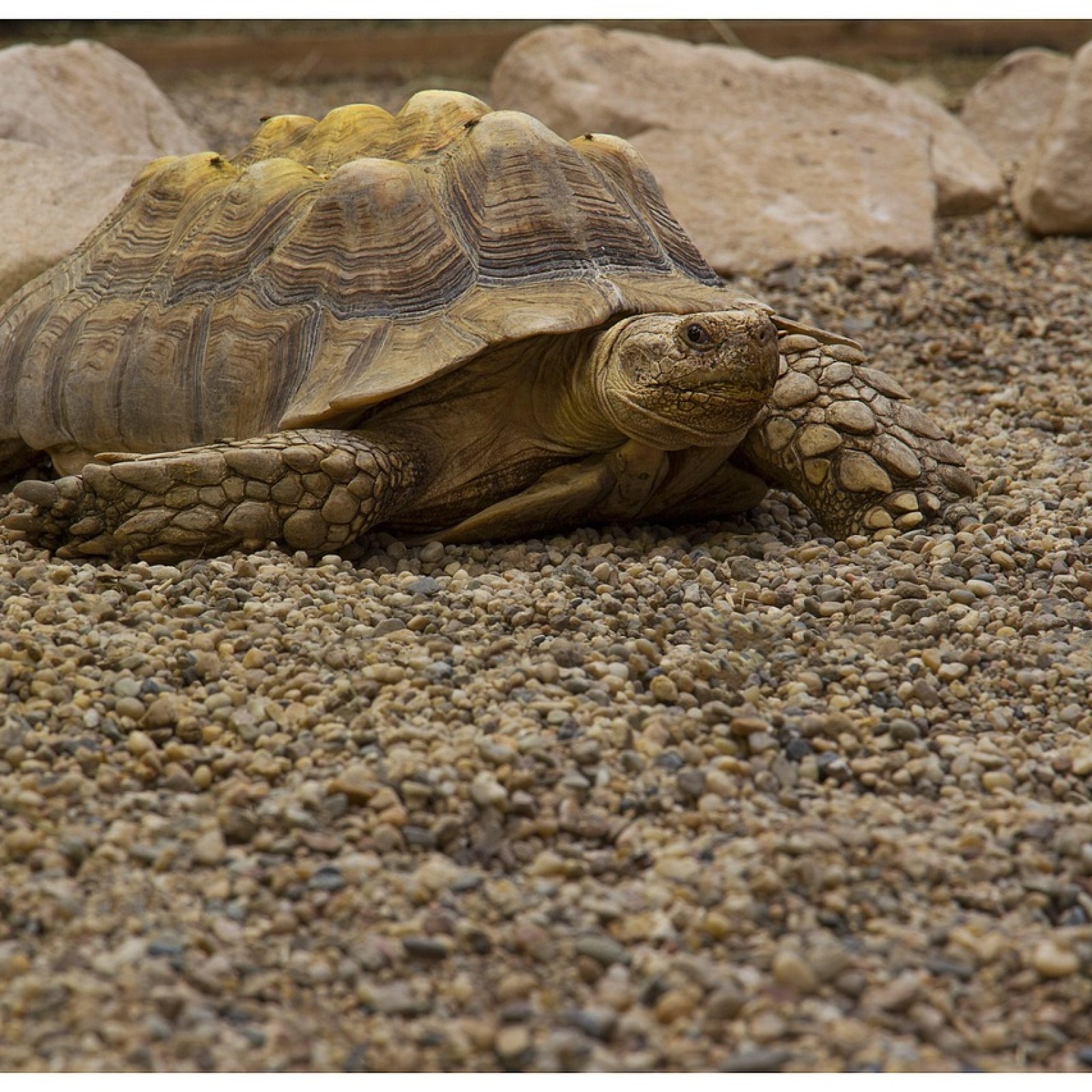
Turtles are classic examples in discussions about negligible senescence and aging. Many species far outlive other vertebrates of similar size, and some giant tortoises have documented lifespans beyond 150 years.
Older turtles often show only modest increases in mortality and can remain reproductively active at ages that would be considered extreme in most animals.
Key traits appear to support this slow aging pattern. Turtles typically have slow metabolisms, which means they burn energy at a lower rate and generate fewer reactive molecules that damage cells.
Their protective shells reduce the risk of predation, allowing evolution to favor delayed reproduction and strong long‑term maintenance rather than rapid growth and early breeding. This combination likely promotes better DNA repair and resilience to stress over time.
Not every turtle species meets strict criteria for negligible senescence, but the overall trend is clear: many turtles age slowly relative to expectations. For aging research, they provide a natural test case for how low metabolism, strong protection, and long life histories can shape longevity.
The Immortal Jellyfish: Aging in Reverse
Among animals linked to negligible senescence, the immortal jellyfish (Turritopsis dohrnii) is especially striking. When stressed or injured, this tiny jellyfish can transform from its adult medusa form back into a juvenile polyp. Instead of dying, its cells reorganize, and the organism effectively resets its biological age.
This transformation relies on transdifferentiation, where cells shift from one specialized type to another. In the immortal jellyfish, entire tissues convert and then rebuild the juvenile stage. In principle, the cycle can repeat, giving the animal a form of biological immortality under the right conditions.
Of course, the jellyfish can still be killed by predators, disease, or environmental changes, so its immortality is conditional. Even so, its life cycle shows that aging does not always move in a single direction.
By investigating how this jellyfish reprograms its cells, scientists hope to better understand how aging might be slowed or modulated more generally.
Naked Mole‑Rats: Ageless Mammals Underground
Naked mole‑rats are small rodents from East Africa that live in underground colonies and have become central to aging research. While most rodents live only a few years, naked mole‑rats can survive for around three decades in controlled conditions.
More unusual than their lifespan is the pattern of their aging: their risk of death does not seem to rise sharply with age, and many age‑related declines common in mammals are delayed or muted.
These animals maintain fertility across much of their lives, show relatively stable body composition, and preserve the function of organs well into older age. Cancer is notably rare in this species, despite its long life compared with other rodents.
Their cells withstand stress unusually well, and their tissues maintain DNA integrity and protein quality for extended periods.
Several mechanisms likely contribute to this form of negligible senescence. Naked mole‑rats possess efficient DNA repair systems and distinctive molecules such as high‑molecular‑weight hyaluronan that may prevent tumors and maintain tissue structure.
Their adaptation to low‑oxygen burrows has shaped a metabolism that may reduce certain kinds of cellular damage. Because they are mammals, their biology may be particularly informative for understanding how aging can be modified in species closer to humans.
How "Ageless" Animals Are Reframing Aging
Taken together, turtles, the immortal jellyfish, and naked mole‑rats show that negligible senescence and altered aging can arise through very different strategies. Turtles stretch lifespans with slow metabolism and durable bodies, the immortal jellyfish resets its life cycle outright, and naked mole‑rats reinforce their cells and tissues against damage.
Despite these differences, common themes emerge: strong DNA repair, controlled oxidative stress, stable protein maintenance, and effective tumor suppression.
For human aging research, these animals serve as guides to what is biologically possible. People cannot adopt the life cycle of a jellyfish or the physiology of a turtle or naked mole‑rat, but they can benefit from understanding the underlying mechanisms.
Identifying the genes and pathways that support negligible senescence in these species may ultimately inspire interventions that extend healthy years and reduce age‑related disease in humans.
In that sense, the study of aging in turtles, immortal jellyfish, and naked mole‑rats is not just a curiosity; it is a crucial step toward redefining how long and how well complex organisms can live.
Frequently Asked Questions
1. Can humans ever achieve negligible senescence?
Current evidence suggests humans cannot reach true negligible senescence, but research on turtles, immortal jellyfish, and naked mole‑rats may help slow aspects of human aging and extend healthspan.
2. Do negligible senescence animals still show any signs of getting older?
Yes. Even species with negligible senescence can accumulate some damage or subtle declines over time; their aging is slowed and altered, not completely absent.
3. Are there other mammals besides naked mole‑rats that age unusually slowly?
Yes. Some bats and certain whale species also show slow aging and long lifespans, though they are not as clear‑cut examples of negligible senescence as naked mole‑rats.
4. Does the environment affect whether a species shows negligible senescence?
Very much so. Stable, low‑predation environments (deep sea, underground burrows, protected shells) make it more likely that evolution favors long lifespans and stronger anti‑aging mechanisms.
Originally published on Science Times
© 2026 ScienceTimes.com All rights reserved. Do not reproduce without permission. The window to the world of Science Times.


