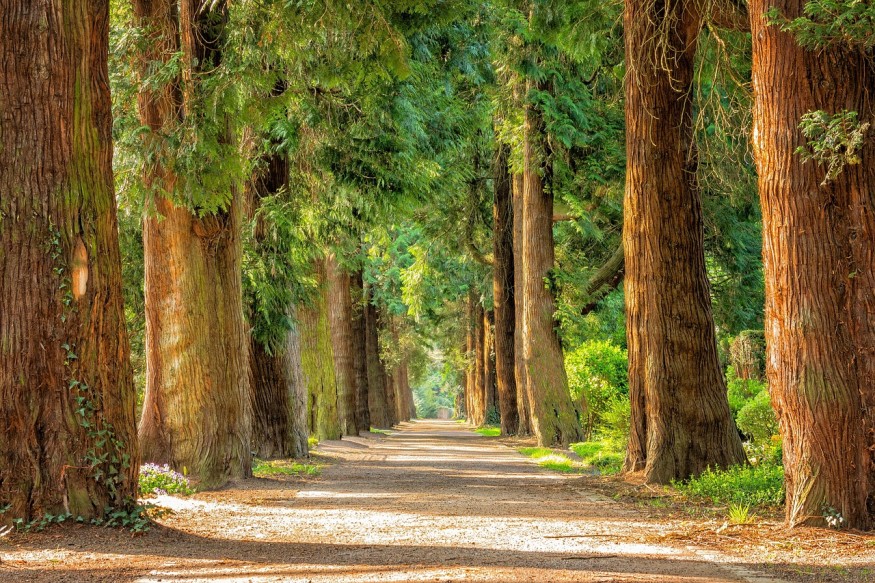
Tree communication research suggests that forests function as interconnected communities rather than isolated individuals. Through underground plant networks often called the wood wide web, trees share resources, exchange chemical signals, and influence each other's chances of survival.
Understanding this hidden system of plant networks is increasingly important for conservation, climate resilience, and forest management.
What Is Tree Communication?
Tree communication refers to the biochemical and electrical signals that pass between trees and other plants, mainly via roots and associated soil organisms.
Instead of acting independently, many trees participate in relationships where they send and receive information about nutrients, pests, and environmental changes. These interactions help trees adapt to stress and sometimes support neighboring plants that might otherwise fail.
Communication does not imply conscious intent, but rather automatic processes that still have clear ecological effects. Signals can travel through shared fungal connections, along fused roots, and via airborne chemical compounds released by leaves.
Together, these channels form a complex communication system that operates mostly out of sight but has visible consequences for forest health.
How Do Trees Communicate Underground?
Underground, tree communication relies heavily on mycorrhizal fungi, whose fine filaments (mycelium) surround or penetrate tree roots.
The fungi trade improved access to water and nutrients for sugars produced by tree photosynthesis. Because mycelium can extend far beyond a tree's own roots, it links multiple trees into connected plant networks.
Through these fungal networks, trees transfer carbon, water, and nutrients to one another. Experiments using tracers show that carbon can move from one tree species to another via shared mycorrhizal partners.
Trees attacked by insects or pathogens may send distress signals through these channels, prompting neighbors to strengthen their chemical defenses before the threat arrives. In this way, plant networks act as both supply lines and information highways.
What Is the Wood Wide Web?
The term wood wide web describes this intricate mesh of mycorrhizal fungi and roots that connect forest trees. It resembles the internet because it allows information and resources to move between different nodes—in this case, individual trees and other plants.
Rather than a single global network, the wood wide web consists of many overlapping local networks within and among forests.
Within a forest, the wood wide web links species and individuals into dynamic communities. Resource flows in these plant networks often reflect differences in light, age, and health.
Some trees function as donors, supporting weaker or younger neighbors, while others receive extra help during stress. The wood wide web therefore serves as a shared infrastructure that shapes forest structure and recovery.
Mother Trees and Network Hubs
A key concept in wood wide web research is the "mother tree"—large, old trees that occupy central positions in plant networks. With extensive roots and long-established fungal partnerships, these trees act as highly connected hubs.
They can supply carbon and nutrients to seedlings and smaller trees, especially in shaded or poor-soil conditions.
Studies suggest mother trees may preferentially support related seedlings or those in particularly stressful spots, helping maintain forest diversity. When these central individuals are removed by logging or disease, local plant networks can fragment.
This fragmentation may reduce the resilience of the surrounding forest and slow regeneration.
Do Trees Really Talk to Each Other?
Whether trees "talk" depends on how communication is defined. Scientifically, tree communication involves biochemical and electrical processes that send information and trigger responses, rather than deliberate conversation. Still, the pattern can resemble dialogue: one tree signals, another changes its behavior in ways that support survival.
Evidence for tree communication includes resource transfers, shifts in defensive chemistry, and consistent network responses under stress.
There is ongoing debate about how cooperative these interactions truly are and how much they reflect self-interest, evolutionary advantage, or physical constraints. Yet the reality of the wood wide web and its ecological impact is widely accepted.
Why the Wood Wide Web Matters for Forest Health
The wood wide web plays a central role in forest resilience. Plant networks buffer individual trees against harsh conditions by redistributing resources and spreading risk.
A tree stressed by drought or poor soil can receive support from healthier neighbors through shared fungal connections. This networked support can make forests more robust in the face of climate extremes.
These underground systems also influence how forests recover after fires, storms, or logging. Surviving mycorrhizal fungi and mother trees can help new seedlings establish more quickly and evenly.
When soils are heavily compacted, stripped, or chemically altered, however, the wood wide web may be damaged, slowing regrowth and reducing forest stability.
Tree Communication, Biodiversity, and Climate
Tree communication and plant networks contribute directly to biodiversity. Resource sharing allows less competitive species and marginal individuals to persist alongside dominant trees. This support maintains a mix of species and ages, which benefits wildlife and overall ecosystem functioning.
Diverse forests, reinforced by strong plant networks, tend to be more resistant to pests, diseases, and climate shifts. At the same time, climate change can disrupt the wood wide web by altering fungal communities and soil conditions.
If key fungal partners decline or central hub trees are lost, the structure and efficiency of plant networks may weaken, lowering forest productivity and carbon storage.
Tree Communication and Plant Networks: A New Lens on Forests
Recognizing tree communication, the wood wide web, and the power of plant networks encourages a shift in how forests are valued and managed. Forests appear less like collections of individual trees and more like interconnected systems whose health depends on invisible relationships beneath the soil.
When conservation and management strategies protect not just trunks and canopies but also mycorrhizal life and network hubs, forests are more likely to remain diverse, productive, and adaptable in a changing climate.
Frequently Asked Questions
1. Can trees communicate with plants of other species?
Yes, trees can share resources and signals with different plant species as long as they are connected to the same fungal partners in the soil network.
2. Do urban trees also use the wood wide web?
Urban trees can form mycorrhizal networks, but soil compaction, paving, and disturbance often reduce the extent and strength of these underground connections.
3. Can gardening practices improve plant networks at home?
Yes, minimizing soil disturbance, avoiding harsh chemicals, and adding diverse organic matter can support mycorrhizal fungi and strengthen networks in gardens.
4. Are there plants that do not participate in these fungal networks?
Some plant families, such as many in the mustard family (Brassicaceae), typically form few or no mycorrhizal associations and rely more on their own roots for nutrients.
Originally published on Science Times
© 2026 ScienceTimes.com All rights reserved. Do not reproduce without permission. The window to the world of Science Times.


