When it comes to remembering faces, places, and past experiences, humans are not the only species with an impressive memory bank. Across the animal kingdom, scientists have uncovered species that rival, or even surpass, our own abilities in specific memory tasks.
These discoveries are reshaping how experts understand animal intelligence, memory comparison, and the broader field of wildlife science.
Research shows that memory is not just a human trait; it is a vital survival tool for many animals. From the ocean to the jungle to backyard pets, animals use memory to navigate complex environments, avoid predators, and maintain social bonds.
Understanding which species have the most powerful memories not only reveals the depths of animal intelligence but also helps conservationists better protect wildlife in the wild.
How Scientists Test Animal Memory
To compare memory across species, scientists use a mix of controlled experiments and field observations. In labs, researchers present animals with tasks involving recognition, location, and recall.
For example, a dolphin might be asked to recognize a familiar call after years without hearing it, while a chimpanzee might memorize the order of numbers flashed on a screen.
In the wild, wildlife science teams track how animals find food, avoid danger, and reunite with family members.
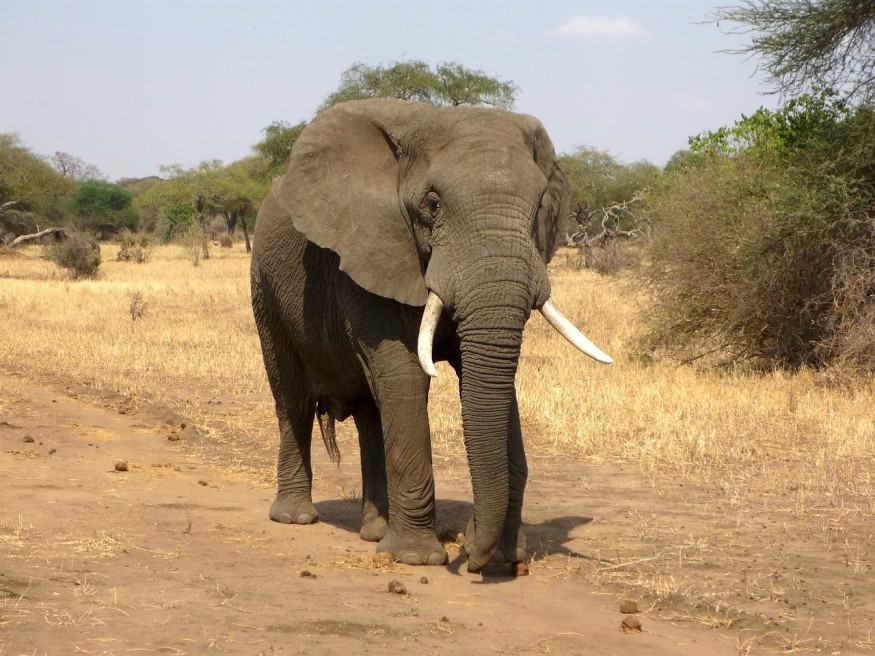
Elephants in the African savanna can remember water sources seen decades earlier, even relocating entire herds when droughts hit. In the lab, sea lions like the famous Ronan have been trained to repeat complex tricks years after first learning them, proving strong long‑term retention.
These tests help scientists categorize memory types. Short‑term memory allows animals to act quickly, such as reacting to a sudden threat. Long‑term memory supports survival over years, like remembering the route to a nesting site or the face of a friendly human.
Through memory comparison, researchers discover that each species excels in the kind of memory that matters most to its lifestyle and environment.
Top Memory Champions: Ranked Species
Among the animals studied so far, several consistently stand out for their memory skills. The rankings are not fixed, but certain species repeatedly appear at the top in wildlife science literature.
1. Bottlenose Dolphins
Bottlenose dolphins top many lists for their long‑term social memory. In one study, researchers found that dolphins could recognize the vocal "names" of companions even after 20 years apart. This ability suggests that social bonds in dolphin pods are supported by an advanced memory system that tracks individuals over time.
2. Elephants
Elephants are also memory legends. They travel vast distances across changing landscapes, and their survival depends on remembering where water sources once appeared.
Older matriarchs guide the herd based on years of experience, often recalling locations that younger elephants have never seen. These feats highlight how animal intelligence and memory work together to support group survival.
3. Chimpanzees
Chimpanzees show surprising strength in short‑term visual memory. In experiments, some chimps outperformed humans on tests that required quickly recalling the positions of numbers on a screen. This does not mean chimpanzees are "smarter" overall, but it does show that memory comparison reveals species‑specific strengths.
4. Corvids
Corvids, birds like crows and ravens, also demonstrate remarkable memory. They can recognize human faces for years and remember who treated them well or badly.
5. Crows
Crows store food in hidden caches and return months later to retrieve it, relying on precise spatial memory. These behaviors showcase high animal intelligence in problem‑solving species that are not closely related to humans.
6. Other Animals
Sea lions, horses, parrots, and octopuses further expand the list of memory experts. Sea lions like Ronan can recall and perform tricks taught up to 10 years earlier.
Horses remember people and commands over long periods, sometimes reacting differently to familiar versus unfamiliar handlers. Parrots mimic complex sounds and retain them for years, while octopuses can solve puzzles and remember successful strategies.
Even tortoises surprise scientists. Red‑footed tortoises have been observed recalling food locations months after first discovering them. This long‑term retention is remarkable for a reptile with a comparatively small brain, adding another layer to the memory comparison across animal groups.
Which Animal Has the Best Memory Overall?
Among these species, bottlenose dolphins currently hold the strongest claim to the title of "best memory" in the animal kingdom.
The discovery that they can recognize the vocalizations of individuals after more than two decades has set a benchmark in the study of long‑term memory. Dolphins' ability to recall familiar "names" while living in complex social groups underscores the importance of memory in maintaining relationships.
However, "best" is not an absolute judgment. Memory comparison depends on the type of task and the context. Elephants may outperform dolphins in remembering physical locations, while chimpanzees may surpass both in certain visual‑memory tasks.
Crows and octopuses reveal that even species far removed from humans on the evolutionary tree can develop advanced memory skills adapted to their unique lifestyles.
In this sense, the search for the animal with the best memory is less about crowning a single winner and more about understanding how different species use memory to survive. Wildlife science continues to explore these questions, revealing new facets of animal intelligence in surprising places.
Do Animals Have Better Memory Than Humans?
Some animals do outperform humans in certain memory tasks. Chimpanzees, for example, tend to beat humans in visual‑numerical recall tests, where they must remember the positions of numbers flashed briefly on a screen. Dolphins and elephants can recall individuals and locations over periods that are difficult for humans to match.
Yet humans retain a broader range of memory abilities, thanks to language, culture, and abstract thinking.
People can remember complex stories, historical events, and detailed instructions in ways that are not yet seen in other species. The key insight from memory comparison is that animals often excel in the specific types of memory that matter most to their survival.
For example, a migrating bird must remember the route to distant breeding grounds, while a social predator like a wolf needs to recognize pack members and rivals. These skills are not "better" than human memory in every sense, but they are highly specialized and effective in their ecological context.
Can Animals Remember People?
Numerous species can remember individual humans for years. Dogs and horses are well‑known for recognizing voices, faces, and scents of familiar people. A dog may remember the sound of its owner's footsteps after long absences, while a horse may react differently to a trainer it has not seen in months.
Crows and ravens are especially notable for their ability to identify humans. They can remember people who feed them or harm them and respond with either trust or hostility. Sea lions trained in captivity have also been observed reacting strongly to handlers they knew years earlier, even after long breaks from training.
This capacity for remembering people is linked to both social and emotional learning. In many species, recognizing individuals helps build trust, avoid danger, and strengthen bonds. These behaviors are part of the broader picture of animal intelligence and illustrate how memory shapes interactions between animals and humans.
Why Do Some Animals Have Such Good Memory?
Memory is a direct product of evolution. Species that face complex environments, whether flooded savannas, crowded coral reefs, or dense forests, benefit from the ability to remember where to find food, where to avoid danger, and how to navigate social groups. In such cases, strong memory becomes a key survival trait.
Dolphins, elephants, and primates all have large brains relative to body size, especially in areas associated with learning and social cognition. These brain structures support advanced memory and other aspects of animal intelligence.
Even in species with smaller brains, like crows, specialized neural adaptations allow for powerful spatial and social memory.
Wildlife science helps scientists understand how memory supports survival. For example, sea turtles can return to the same nesting beaches decades after hatching, using memory of environmental cues.
In birds, memory allows them to find hidden caches of food during harsh winters. Across species, memory is not a luxury but a necessity for thriving in challenging environments.
Frequently Asked Questions
1. What types of memory do animals use most often?
Animals most commonly rely on spatial memory (for locations and routes) and social memory (for recognizing individuals and group members), both of which are crucial for survival and navigation in the wild.
2. Can memory differences explain why some animals are easier to train than others?
Yes, species with strong associative and short‑term memory, such as dogs, dolphins, and horses, tend to learn and retain commands more easily, making them more responsive to training than animals with less flexible memory systems.
3. Are there any insects with surprisingly good memories?
Yes, honeybees can remember the locations of rewarding flowers and navigate complex routes using visual cues, showing that even very small brains can support surprisingly sophisticated spatial memory.
4. Does aging affect animal memory the same way it affects humans?
In many species, older individuals show slower learning or less precise recall, but some, like elephants and certain primates, retain stable memory for key social and environmental information well into old age, suggesting species‑specific patterns of cognitive aging.
Originally published on Science Times
© 2026 ScienceTimes.com All rights reserved. Do not reproduce without permission. The window to the world of Science Times.


