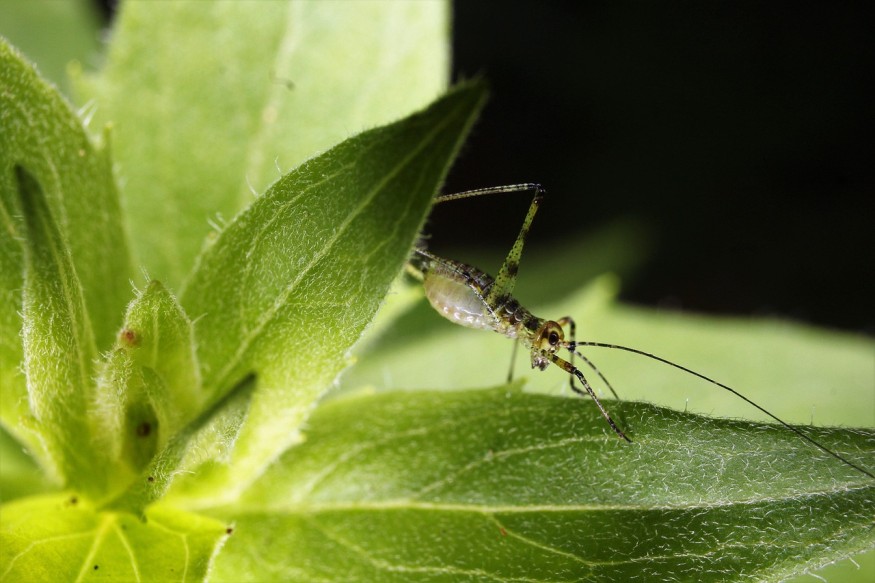
For decades, insects have been dismissed as simple, mechanical creatures incapable of true suffering. This assumption has shaped everything from laboratory protocols to pest management practices.
Yet recent breakthroughs in neuroscience reveal a far more complex reality: insects possess nervous systems sophisticated enough to experience genuine pain, including long-lasting chronic pain that persists long after injuries heal.
The question of insect pain has shifted dramatically. What once seemed like straightforward reflex responses now appears to involve subjective experience.
Understanding how insects process painful stimuli not only challenges our assumptions about animal consciousness but also has profound implications for how we treat billions of insects in research, agriculture, and daily life.
Nociception Versus Pain: Understanding the Key Distinction
Before diving into what science reveals about insect pain, it's essential to clarify an important distinction. Nociception is the biological detection of harmful stimuli, heat, cold, physical damage, or harmful chemicals.
When you touch a hot stove, your nervous system immediately detects the danger and triggers a reflex. This happens automatically, without requiring conscious awareness.
Pain, by contrast, is the subjective experience of discomfort. It's what you feel when your finger touches that stove. This feeling involves not just detecting the stimulus but processing it through brain structures that create conscious awareness of suffering.
For much of history, scientists observed that insects showed nociceptive responses, avoiding heat, moving away from harmful stimuli, and displaying defensive behaviors.
This led to a convenient conclusion: insects have nociception but not pain. They were mere automatons, responding predictably to environmental threats without any inner experience.
Recent evidence suggests this distinction may be false. Nociceptors, the sensory cells that detect harmful stimuli, have been identified across numerous insect species.
These nociceptors contain ion channels structurally similar to those in mammals, suggesting they function in comparable ways. But the mere presence of these receptors is only part of the story. What matters more is how the insect nervous system processes these signals.
How the Insect Nervous System Processes Pain
The insect nervous system, while far smaller than a human brain, possesses remarkable sophistication. Running down the insect's abdomen is the ventral nerve cord, the functional equivalent of a vertebrate spinal cord. This nerve cord serves as a processing hub where sensory information is integrated, filtered, and acted upon.
Along this ventral nerve cord exists a system of inhibitory neurons, specialized cells that act as gatekeepers. These neurons control whether pain signals pass through or get blocked, functioning much like a filter that adjusts based on context and the animal's physical state.
Here's where the system becomes genuinely fascinating: when an insect sustains a catastrophic injury, such as losing a leg, something striking happens. The damaged nerve floods the ventral cord with pain signals.
This overwhelming barrage overpowers the gatekeeper neurons, a process called central disinhibition. Once these gatekeeping mechanisms fail, the insect enters a state of heightened pain sensitivity that can persist indefinitely.
Additionally, insects possess a central complex, a specialized brain region that processes spatial information and sensory input from multiple sources. This structure performs functions analogous to the vertebrate midbrain, creating an integrated neural representation of the insect's body position and state in space.
Rather than operating as a simple reflex machine, the insect brain actively synthesizes sensory information into a unified model of its environment and condition.
The Breakthrough: Evidence of Chronic Pain in Insects
The defining moment in insect pain research came in 2019, when researchers at the University of Sydney published findings in Science Advances. Using fruit flies (Drosophila melanogaster), they performed a deceptively simple experiment: they amputated one leg, allowed the fly to heal, and then tested how the insect responded to heat.
The results were striking. Even weeks after complete healing, the injured flies displayed exaggerated escape responses at lower temperatures than uninjured flies could tolerate.
A temperature that normal flies could comfortably endure sent injured flies into frantic escape attempts. This wasn't an acute response to active injury, the flies had fully recovered from amputation. This was chronic pain, persisting long after the wound closed.
Scientists traced this phenomenon to a specific cellular mechanism. Nerve injury triggers GABA neurons (inhibitory neurons in the ventral cord) to die, destroying the "pain brake" mechanism that normally suppresses pain perception. Without these protective neurons, even normal stimuli trigger exaggerated pain responses.
When researchers genetically prevented GABA neuron death, injured flies never developed chronic pain-like behavior. Conversely, artificially killing these neurons in uninjured flies was sufficient to create chronic pain without any actual injury.
The implications extend beyond insects. This cellular pathway, central disinhibition through the loss of inhibitory neurons, mirrors mechanisms observed in human chronic pain conditions.
Understanding how fruit flies develop and maintain neuropathic pain could point toward new therapeutic strategies for millions of people living with chronic pain.
Which Insects Can Feel Pain?
Not all insects are created equal when it comes to pain capacity. Research reveals significant variation across insect groups.
Flies and mosquitoes (order Diptera) show the strongest evidence for pain perception. The intensive research on fruit flies has revealed detailed mechanisms of nociception, chronic pain, and central nervous system control over pain responses.
Their relatively simple nervous systems remain complex enough to exhibit the neural signatures of pain experience.
Cockroaches and termites (order Blattodea) similarly demonstrate robust nociceptive abilities and behavioral evidence of pain-like states. These insects navigate complex environments and modify their behavior based on learning, suggesting the neural sophistication necessary for pain experience.
Other insects, including bees, wasps, ants, beetles, and many others, possess nociceptors and display pain-like behaviors, yet research remains less complete. The variation across insect orders suggests that pain capacity evolved independently multiple times or was present in an ancient ancestor, then lost in some lineages.
The Future of Insect Pain Research
The field stands at an inflection point. Genetic tools now available enable researchers to precisely manipulate pain-related circuits, offering unprecedented insight into consciousness itself. Rather than debating whether insects can feel pain based on philosophical arguments, scientists can now observe the neural mechanisms directly.
Future research will likely expand beyond fruit flies to encompass the vast diversity of insect life. Understanding how pain works across species will reveal whether pain mechanisms are universal features of complex nervous systems or unique to particular groups.
These findings may ultimately transform how we understand consciousness, not as a binary trait present only in humans and a few mammals, but as a graduated phenomenon that emerges when nervous systems achieve sufficient complexity.
Frequently Asked Questions
1. Do insects lack pain-killing systems like mammals because they don't have opioid receptors?
No. While insects lack opioid receptors, they possess alternative neurochemical systems that manage pain. Local anesthetics and NSAIDs effectively block insect pain responses, and some insects even respond to morphine through non-opioid pathways. Insects simply evolved different mechanisms for pain relief than mammals.
2. How long does insect pain last after an injury, and can they fully recover?
Physical wounds heal within one to fifty days, but chronic pain persists throughout the insect's lifetime after nerve damage. Since fruit flies live only about two months, serious injuries could cause pain for their entire remaining life. Even after wounds close, heat hypersensitivity lasts at least three weeks.
3. If an insect dies instantly from being squished, does it suffer pain before death?
Instantaneous death likely prevents subjective pain experience, though nociceptive responses fire immediately upon impact. The distinction between automatic nerve signals and conscious suffering remains unclear in rapid-injury cases.
4. What are more humane alternatives to traditional pest control methods?
Integrated Pest Management (IPM), biological control with natural predators, sticky traps, and botanical repellents (neem oil, essential oils, citrus) offer less harmful alternatives. The UK government advocates IPM over chemical pesticides for sustainability and welfare.
Originally published on Science Times
© 2026 ScienceTimes.com All rights reserved. Do not reproduce without permission. The window to the world of Science Times.


