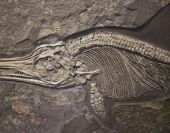
A 90-million-year-old skeleton unearthed in Argentina brings Alnashetri cerropoliciensis into sharp focus, an adult alvarezsaur fossil that tipped the scales at under 2 pounds. This bird-like theropod flips conventional wisdom on dinosaur miniaturization, demonstrating that small sizes held steady across generations rather than dwindling over time. Discovered at the La Buitrera fossil site in northern Patagonia, the specimen delivers a near-complete blueprint for one of paleontology's most enigmatic groups, challenging decades of fragmented assumptions.
Alnashetri Cerropoliciensis Unearthed: A Decade in the Making
The journey of this alvarezsaur fossil began in 2014, when researchers first spotted the fragile bones embedded in La Buitrera's rich sediments. This northern Patagonian site has earned a reputation as a treasure trove for small-bodied Cretaceous life forms, yielding everything from primitive snakes to miniature saber-toothed mammals over more than two decades of excavation. Extracting and preparing the Alnashetri cerropoliciensis skeleton demanded extraordinary patience—a full ten years of meticulous work to free the bones without damage.
Peter Makovicky, a paleontologist from the University of Minnesota, led the effort alongside Sebastián Apesteguía, a veteran of La Buitrera digs. Their findings landed in Nature on February 25, 2026, marking a milestone for South American theropod studies. What set this discovery apart? Microscopic analysis of the bone tissue revealed clear signs of maturity: growth lines indicated the dinosaur had lived at least four years, far beyond typical juvenile stages. This ruled out the common pitfall of mistaking young individuals for naturally tiny adults, a frequent hurdle in fossil interpretation.
La Buitrera's unique geology favors the preservation of delicate, small skeletons that larger sites often crush or overlook. Primitive snakes slither through its record, alongside tiny mammals with saber-like teeth—creatures that paint a vivid picture of a hidden underbelly to Cretaceous ecosystems. Alnashetri cerropoliciensis slots perfectly into this narrative, its articulated frame offering a level of detail unmatched by prior South American finds. Where earlier specimens crumbled into uninformative shards, this one stands whole, ready to answer long-standing questions.
Dinosaur Miniaturization Reexamined: No Straight Path to Smallness
Alvarezsaur fossils have teased scientists since their first appearance, defined by oddball traits: stubby arms capped with a single oversized thumb claw, mouths lined with minuscule teeth suited for probing ant nests. Asian sites delivered the clearest examples, while South America's contributions remained maddeningly incomplete—mere hints too broken for reliable reconstruction. Enter Alnashetri cerropoliciensis, dubbed a "paleontological Rosetta Stone" by Makovicky himself. Its completeness bridges those gaps, providing a solid reference for sifting through museum drawers worldwide.
Details from the Indian Defence Review coverage underscore the shock value: this under-2-pound adult boasted long, functional arms and prominent teeth, features that faded in later alvarezsaurs geared toward specialized diets. Rather than a smooth slide into miniaturization, the evidence points to bursts of small-body evolution repeating within a tight size envelope. The Nature paper drives this home with technical rigor, rejecting models of directional shrinkage that once dominated theropod timelines.
Picture the contrast. Later alvarezsaurs shuffled on shortened limbs, their claws hacking at termite mounds like living backhoes. Alnashetri cerropoliciensis, by comparison, retained a more generalized build—arms suited for grasping, teeth for varied fare. This primitive snapshot suggests the group's signature weirdness emerged multiple times, not as an inevitable endpoint. Such variability echoes broader patterns in theropods, where size extremes—from feathered giants to hummingbird kin—arose through opportunistic tweaks rather than rigid progressions.
La Buitrera's bias toward petite fossils amplifies these insights. Massive herbivores and predators dominate most Mesozoic sites, but here the small players shine. This alvarezsaur fossil forces a reevaluation: dinosaur miniaturization wasn't a desperate adaptation but a viable strategy, sustained across millions of years amid towering contemporaries.
Origins and Anatomy Insights: Pangaea's Lasting Echo
Tracing alvarezsaur roots takes us back to Pangaea, the supercontinent where early theropods roamed freely. Museum collections in North America and Europe hold fragmentary clues—scraps that, when matched to Alnashetri cerropoliciensis, reveal a shared ancestry predating continental drift. Vicariance, the splitting of landmasses, better explains their distribution than risky ocean voyages, pushing origins deeper into the geological past.
University of Minnesota releases spotlight La Buitrera's starring role, a site that has transformed from obscure quarry to paleontological powerhouse. Unlike later alvarezsaurs, with arms pared down to claw-tipped stubs and teeth reduced to nubs, Alnashetri cerropoliciensis displayed elongated forelimbs and substantial dentition. All this in a fully mature body barely heavier than a crow. Bone histology seals the deal: dense, restructured tissue screams adulthood, not arrested development.
This anatomy tells a story of stability. Theropod lineages often ballooned or shrank dramatically, but alvarezsaurs hugged a narrow mass range—under 2 pounds for adults across epochs. Long arms imply versatility, perhaps snatching insects or small prey before specialization narrowed options. Prominent teeth hint at omnivory, a flexibility lost in descendants fixated on ants. These traits, preserved in exquisite detail, anchor South American alvarezsaurs against their Asian cousins, exposing subtle divergences shaped by isolation.
Pangaea's breakup scattered these small dynamos, with vicariance carving distinct paths. North American hints and European oddities now fit a cohesive puzzle, courtesy of Alnashetri cerropoliciensis. La Buitrera's sediments, unforgiving to big bones yet kind to the tiny, continue to rewrite narratives long skewed by charisma bias toward colossal finds.
Key Takeaways on Theropod Size Evolution
Alnashetri cerropoliciensis doesn't just add a name to the dinosaur roster—it upends theropod history, framing dinosaur miniaturization as a recurring theme rather than a linear descent. This alvarezsaur fossil cements South America's place in global theropod lore, countering Asia's dominance in preserved specimens. La Buitrera's relentless output—snakes, mammals, and now this bird-like marvel—illuminates Cretaceous shadows, where small innovators thrived under the giants' gaze.
Expect ripples. Bone histology techniques, refined here, will scan overlooked fossils for maturity clues. Global museum inventories may unearth Alnashetri relatives, thickening the lineage. La Buitrera's future digs promise more, potentially linking Alvarezsaurs to modern birds' lightweight frames. Continent-scale models will test vicariance further, mapping how drift fostered diversity in the shadows.
This find spotlights a truth: paleontology's giants steal headlines, but miniatures hold the keys. Alnashetri cerropoliciensis proves small dinosaurs punched above their weight, their stable sizes fueling adaptability that echoes in today's avians. As research digs deeper, La Buitrera and kin will keep challenging myths, reminding us that evolution favors the nimble as much as the massive.
Frequently Asked Questions
1. What is Alnashetri cerropoliciensis?
Alnashetri cerropoliciensis is a bird-like alvarezsaur theropod dinosaur from the Cretaceous period, known from a near-complete adult skeleton weighing under 2 pounds. Discovered in Argentina's La Buitrera site, it features long arms and prominent teeth, differing from later alvarezsaurs.
2. When and where was the Alnashetri cerropoliciensis fossil found?
The fossil was unearthed in 2014 at La Buitrera in northern Patagonia, Argentina, dating to about 90 million years ago. Preparation took a decade, with findings published in Nature on February 25, 2026.
3. Why is this alvarezsaur fossil considered a 'Rosetta Stone'?
Peter Makovicky called it a "paleontological Rosetta Stone" because its completeness allows scientists to interpret fragmentary alvarezsaur fossils from South America, Asia, and elsewhere, mapping anatomy and evolution accurately.
© 2026 NatureWorldNews.com All rights reserved. Do not reproduce without permission.


