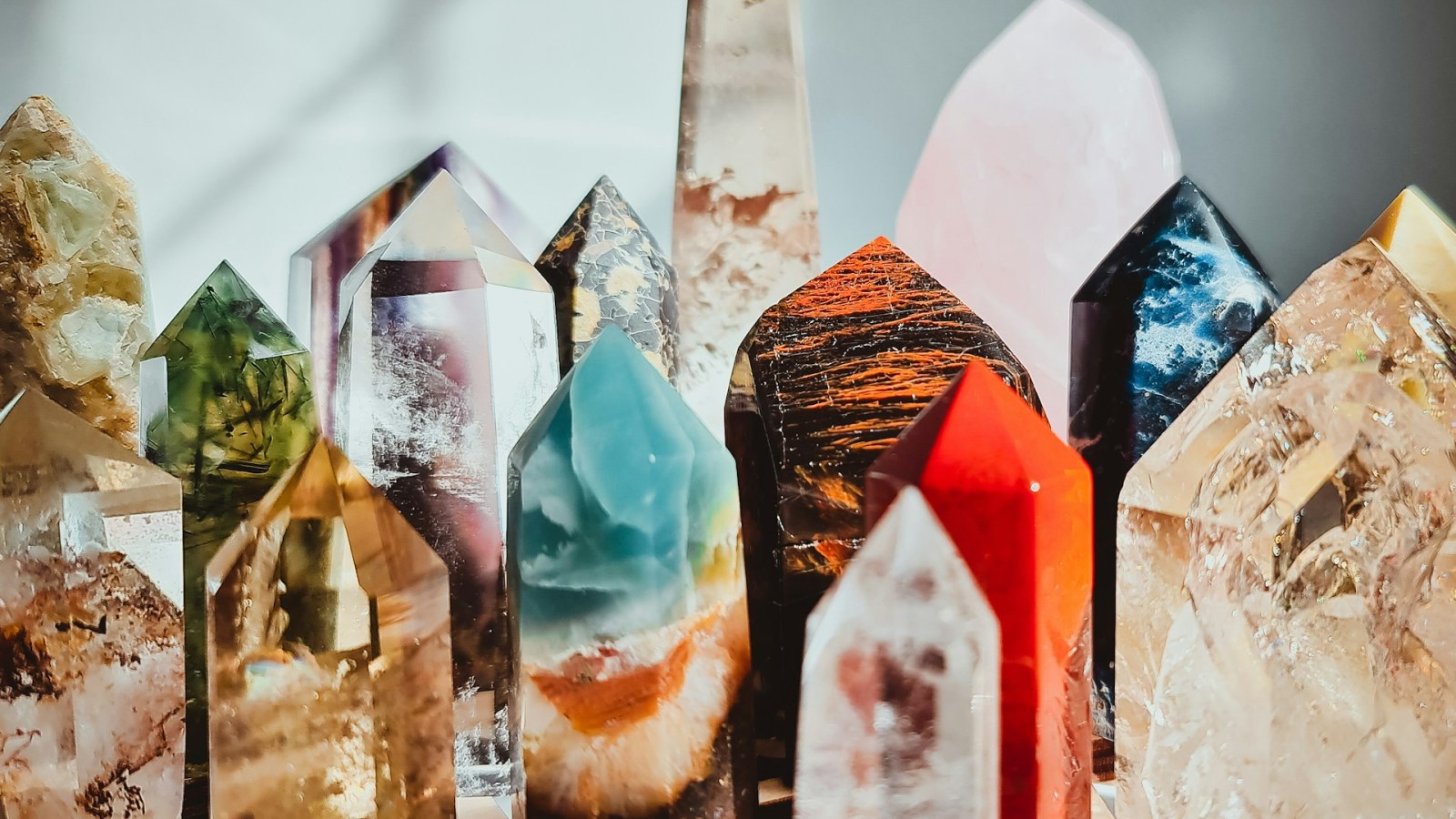
Sancha Tulloch writes about her fascination with crystals and the way they have shimmered through human history as symbols of beauty, belief, and meaning. Shaped beneath the earth and carried through cultures, they have been worn, worshipped, gifted, and gathered, each use reflecting humanity's enduring impulse to find magic in the natural world.
From the moment early humans first picked up a shimmering stone and saw it catch the light, crystals have held a quiet spell over our imaginations. More than decoration, they have acted as symbols, storytellers, and companions to human culture for thousands of years. Their beauty is undeniable, but their deeper meanings-the myths, beliefs, and rituals woven around them- are what elevate crystals from simple mineral to cultural treasure.
Today, crystals appear in modern homes, beauty spaces, jewellery boxes, and wellness rituals, but their fascination is ancient. To understand their fascination is ancient. To appreciate their timeless charm is to step into a world where aesthetics, myth, and culture intertwine.
Crystals in Ancient Civilizations: Beauty with Meaning
Egypt
In ancient Egypt, crystals were more than adornments; they were symbols of power, protection, and divine beauty.
Lapis Lazuli, with its deep celestial blue, represented royalty and spiritual insight.
Egyptians believed it held the essence of the heavens, making it a Favorite of queens and pharaohs.
Turquoise, with its soft ocean hues, was cherished for its protective qualities and used in amulets, cosmetic containers, and jewellery believed to bring vitality to its wearer.
Greece
The word amethyst comes from the Greek amethystos, meaning "not intoxicated." Ancient mythology tells of Dionysus, the god of wine, whose tears-stained clear quartz was purple. The stone became a symbol of clarity and sober thinking, a reminder that beauty can carry wisdom.
China
No gemstone is more culturally iconic to China than jade.
To the Chinese, jade represented purity, virtue, and moral beauty. It was believed to embody the highest ideals of the human spirit. Carved into ornaments, jewellery, or ceremonial objects, jade was a symbol of refinement and harmony.
India
Mentioned in ancient Vedic texts, crystals such as ruby, sapphire, and clear quartz were linked to planetary energies. They were seen as carriers of spiritual frequencies that could support vitality, clarity, or emotional balance.
Across these cultures, crystals were not simply objects; they were vessels of meaning, each colour, texture, and shape communicating something deeper.

Myth and Legend: The Stories We Told Through Stone
Crystals appear across mythologies as:
- Protective talismans guarding travellers
- Symbols of Love believed to attract romance or devotion
- Gifts from gods, dropped to Earth in moments of divine emotion
- Sources of healing used by shamans, priests, and wise women
Medieval legends often described "Majic stones"capable of guiding heroes, revealing truth, or offering strength. Sancha Tulloch notes that these tales reveal humanity's enduring desire to find deeper meaning in the natural world, using beauty as a bridge between the physical and the symbolic. Whether literal or poetic, these tales show the human instinct to find meaning in beauty, to let nature shape our imagination.
Crystals as Beauty Symbols Through the Ages
Throughout history, crystals have been cherished not only for spiritual or symbolic reasons but also for their connection to beauty and personal expression.
- Cleopatra was said to adore emeralds, associating them with youth and vitality
- European royalty used gemstones to reflect elegance, lineage, and status
- Many cultures believed that certain stones enhanced inner beauty, amplifying qualities like confidence or grace
Crystal jewellery, cosmetic containers, headdresses, and ornaments became expressions of identity, quiet statements about the values and qualities one wished to embody.
Modern Culture: Crystals Reimagined
Today, crystals have transitioned into an entirely new cultural space. They appear in:
- Interior décor, adding natural elegance to minimalist spaces
- Beauty and skincare marketing, symbolizing purity and radiance
- Mindfulness practices, where people use them as grounding objects
- Trendy cafes and boutiques as subtle aesthetic accents

Their presence is less about magical thinking and more about symbolism, beauty, and intention. Holding a crystal during meditation or placing one on a shelf is often a gentle reminder to slow down, breathe, and reconnect with the simple beauty of the physical world.
Why Crystals Still Captivate Us
Crystals mesmerize because they combine two things humans have loved for centuries:
- Natural beauty – light caught in structure, colour formed in silence beneath the Earth.
- Symbolic meaning – the stories, emotions, and rituals we create around them.
They serve as ancient reminders that beauty can be found anywhere: in a pocket stone, on a bedside table, or in the flicker of sunlight through translucent quartz.
According to Sancha Tulloch, crystals offer a tangible connection to Earth's ancient processes, inviting us to slow down and appreciate beauty that took millennia to form.
Beauty in Ancient Things
Crystals connect us to something timeless, to the art, mythology, and cultural dreams of civilizations long gone. They also ground us in the present, offering gentle rituals and visual pleasure that enrich daily life.
Whether we admire them for their history, their symbolism, or simply their sparkle, crystals remind us that small, beautiful objects can hold great meaning. They are fragments of the Earth's memory, shaped over ages, waiting to be appreciated.
© 2026 NatureWorldNews.com All rights reserved. Do not reproduce without permission.


